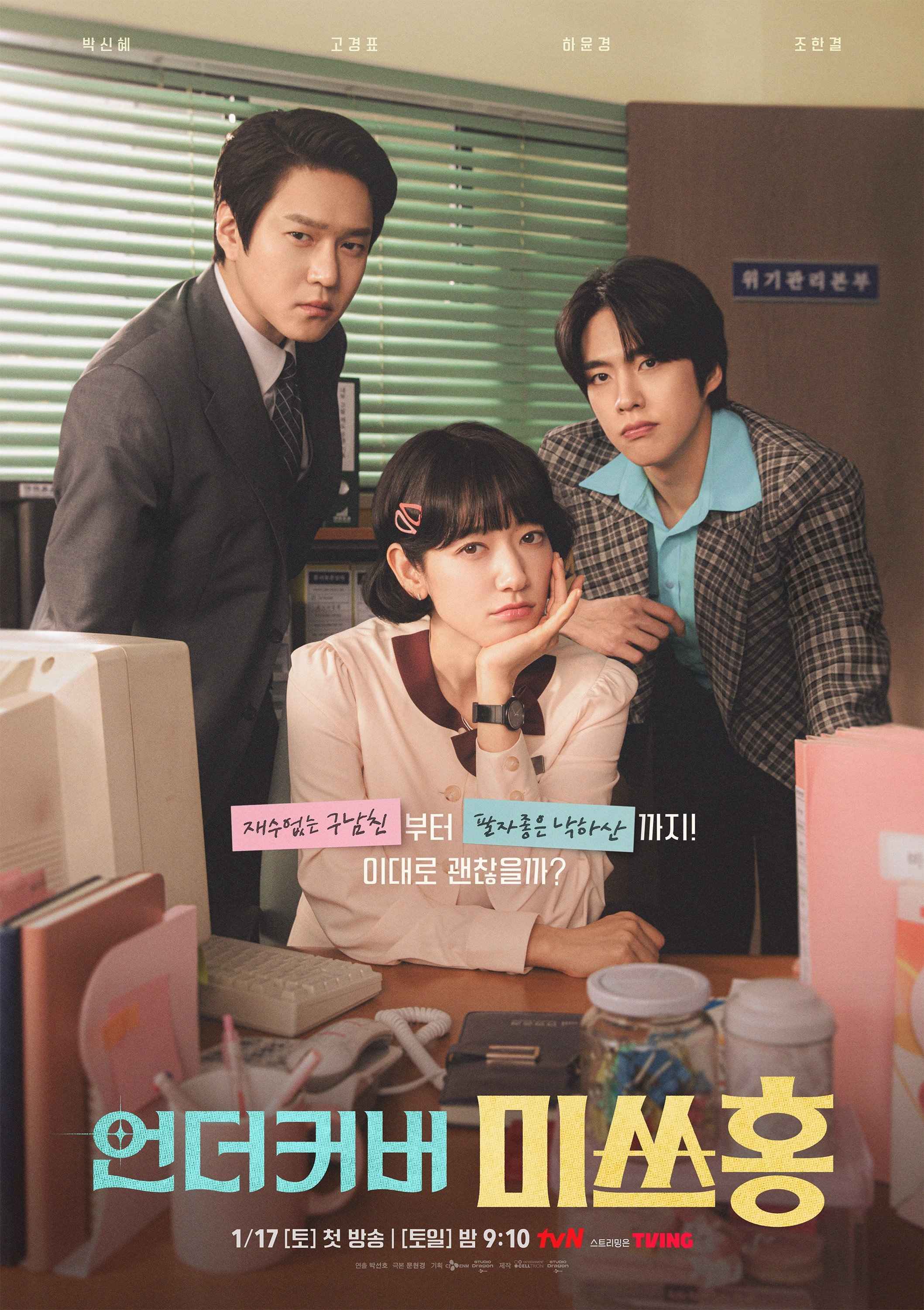
Set against the turbulent backdrop of the late 1990s, just as South Korea was grappling with the aftermath of the IMF financial crisis, "Undercover Miss Hong" delivers a spirited and bold tale of transformation within the cutthroat world of finance. The story centers on Hong Geum-bo, a legendary figure in Yeouido's financial district and an elite supervisor at the Financial Supervisory Service. At 35, she has clawed her way to the top of a deeply conservative, male-dominated industry through sheer competence and steely determination. However, her flawless career takes a sharp turn when she detects suspicious capital flows and deep-rooted corruption within Hanmin Securities, a major brokerage firm. To uncover the truth that lies buried beneath cooked books and corporate power plays, she makes a shocking decision: she abandons her prestigious identity, cuts her hair, and infiltrates the company disguised as a clumsy, 20-year-old entry-level employee. The drama masterfully captures the unique atmosphere of the late 90s, utilizing the period setting to fuel a hilarious and poignant workplace comedy. It was an era when female employees were often reduced to "Miss" followed by their surname, tasked primarily with making coffee and running errands regardless of their potential. Watching Hong Geum-bo, a woman accustomed to wielding absolute authority, suddenly forced to navigate the bottom of the corporate food chain creates endless comedic situations. She must bow to supervisors far younger than her real self, feign ignorance over simple tasks, and endure the daily indignities of being a "lowly" female staffer. Yet, within this humiliation lies her awakening. Assigned to the perpetually underfunded and ignored Crisis Management Division, she begins to form genuine bonds with the misfit colleagues she would have once overlooked. Beyond the laughs and the retro aesthetics, the series explores profound themes of justice and solidarity. The narrative drives toward a thrilling confrontation between the "ants"—the ordinary retail investors and workers—and the corrupt founding family of Hanmin Securities, who view the company's funds as their personal piggy bank. In 2026, as the world navigates the economic uncertainties following the pandemic, the struggles of the late 90s resonate with renewed relevance. The drama challenges the modern mantra of "every man for himself," offering instead a story where empathy and collective action become the ultimate weapons against systemic greed. Hong Geum-bo's journey from a solitary elite to a leader of the underdog creates a powerful emotional arc that speaks to viewers across generations. Starring Park Shin-hye in a dynamic role that requires her to toggle between a charismatic executive and a rookie office worker, the series promises a tour de force performance. She is joined by a stellar ensemble cast including Ko Kyung-pyo, Ha Yun-kyung, and Jo Han-gyeol, who bring the vibrant and chaotic office dynamics to life. Directed by Park Seon-ho, known for his stylish and witty storytelling in "Business Proposal," and written by Moon Hyun-kyung, the production blends nostalgic visuals with sharp social commentary. Airing on tvN and streaming globally on Netflix starting January 17, 2026, "Undercover Miss Hong" is not just a crime procedural; it is a heartwarming tribute to the resilience of ordinary people fighting for their place in a changing world.
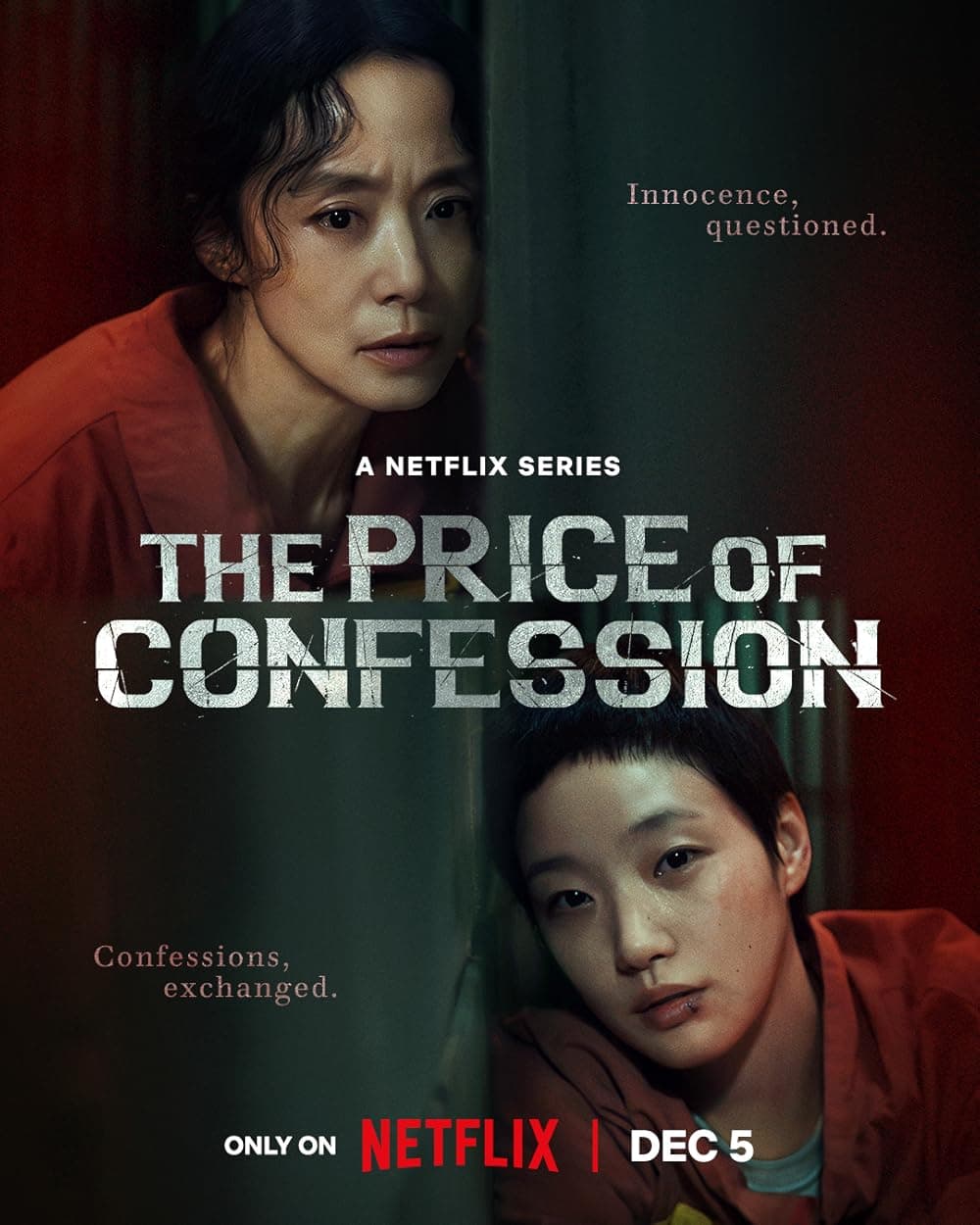
In the shadowy underbelly of Seoul's justice system, 'The Price of Confession' unfolds as a gripping South Korean mystery thriller that plunges viewers into a web of moral ambiguity, vengeance, and buried secrets. Released on Netflix in December 2025, this visually stunning series is directed by the acclaimed Lee Jung-hyo, known for his ability to blend genre tension with deep emotional resonance. Returning to the thriller genre with a darker, more mature tone, Lee captures the claustrophobic dread of prison cells and the relentless pursuit of truth in courtrooms, all while exploring the devastating cost of innocence in a society quick to judge. At its core, the narrative centers on An Yoon-soo (played by the legendary Jeon Do-yeon), a serene art teacher whose idyllic life shatters when her husband is brutally murdered in his studio. Thrust into the spotlight as the prime suspect, Yoon-soo faces public scorn and a swift conviction, landing her in the harsh confines of prison and separating her from her young daughter. Her calm facade cracks under pressure until she encounters Mo-eun (Kim Go-eun), a fellow inmate dubbed 'the witch' for her eerie perceptiveness and chilling demeanor. Mo-eun, imprisoned for a mysterious past crime, proposes a sinister pact through the walls of solitary confinement: she will provide the key to proving Yoon-soo's innocence if Yoon-soo assists in a dangerous vendetta. This Faustian bargain propels the plot, forcing Yoon-soo to navigate a treacherous path between self-preservation and unthinkable crime. The ensemble cast delivers powerhouse performances that elevate the series beyond standard procedurals. Jeon Do-yeon embodies quiet resilience turning to desperate resolve, her subtle expressions conveying layers of grief and guilt that anchor the show's emotional weight. Kim Go-eun is mesmerizingly enigmatic, her dead-eyed stare and calculated whispers revealing a woman shaped by profound trauma, creating an electric chemistry with Jeon that drives the narrative. They are supported by Park Hae-soo as Prosecutor Baek Dong-hun, who grapples with ethical erosion as he uncovers the flaws in his own case, and Jin Seon-kyu as the rugged lawyer Jang Jung-gu, who brings raw physicality and unyielding loyalty to Yoon-soo's defense. Thematically, 'The Price of Confession' dissects the fragility of justice, the corrosive power of revenge, and the societal scars of class disparity in modern Korea. It poses haunting questions: What is the true price of confession—freedom, or the soul? How far will one go for redemption, and does innocence survive corruption? Visually, the direction masterfully employs stark prison grays contrasting with vibrant flashbacks of art and domestic life, with cinematography that lingers on confined spaces to amplify paranoia. Filmed across Seoul's gritty urban landscapes, prison sets in Gyeonggi Province, and moody studio interiors, the series invites film tourism to explore the city's cinematic underbelly—from shadowy alleys evoking the murder night to contemporary art districts reflecting Yoon-soo's lost world. It stands as a reminder that truth often demands the ultimate sacrifice, making it a perfect watch for those who appreciate high-stakes psychological drama.
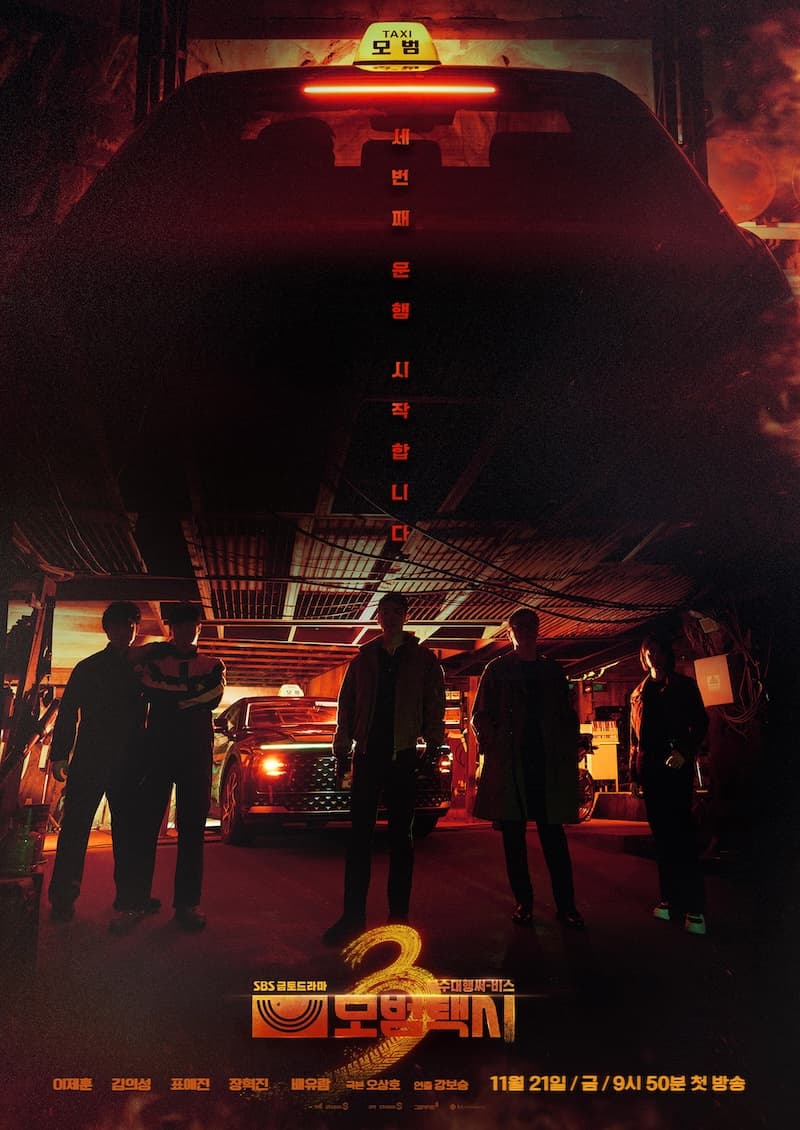
In the pulsating streets of Seoul and beyond, **Taxi Driver Season 3** revs up as the third electrifying chapter of the vigilante saga, where justice isn't served by the law but delivered at breakneck speed by the enigmatic Rainbow Taxi team. Premiering on SBS on November 21, 2025, this 16-episode powerhouse airing Fridays and Saturdays captures the raw fury of a society demanding retribution. It blends high-octane chases, brutal confrontations, and moral reckonings that echo Korea's darkest real-world scandals. From the neon-lit underbelly of human trafficking rings to the glitzy facades of corporate scams, the series thrusts viewers into a world where ordinary victims summon extraordinary avengers, promising catharsis in every tire-screeching takedown. The show continues to stand as a cultural phenomenon, turning the iconic black deluxe taxi into a symbol of hope for the voiceless. At the heart of the engine roars Kim Do-gi (Lee Je-hoon), the ex-special forces driver whose unyielding sense of justice was forged in personal tragedy—his mother's unsolved murder. Now behind the wheel of Rainbow Taxi's luxury facade, Do-gi leads a tight-knit crew reassembled after a hiatus, sparked by a desperate father's plea to rescue his son from international traffickers. CEO Jang Sung-chul (Kim Eui-sung) orchestrates operations from the shadows with steely resolve, while core members like the tech-savvy hacker Ahn Go-eun (Pyo Ye-jin) and the brawny engineering duo Choi Kyung-goo (Jang Hyuk-jin) and Park Jin-eon (Bae Yoo-ram) bring unbreakable camaraderie and specialized skills to the fray. Their dynamic pulses with loyalty tested by escalating dangers, facing off against new threats including Shô Kasamatsu's chilling Keita Matsuda, a Yakuza operative in the 'Neko Money' syndicate. Each character grapples with the vigilante code's gray areas, making their bonds as compelling as their physical battles. The narrative ignites with the international 'Neko Money' ring—an insidious fusion of loan sharking, human trafficking, and Yakuza influence—pulling the team into cross-border chaos from Japan to Vietnam. As they dismantle this beast, story arcs pivot to fraudulent schemes preying on the vulnerable and entertainment industry horrors, mirroring Korea's plague of elderly scams, cult abuses, and sex trafficking. These cases aren't mere plots; they are visceral dramatizations of systemic failures, forcing the team into moral dilemmas where vengeance blurs with corruption, and personal histories collide with global conspiracies threatening their own existence. The script fearlessly tackles headline-grabbing social issues, grounding its stylized action in emotional reality. Thematically, **Taxi Driver 3** dissects vigilante justice's double-edged sword: the intoxicating rush of retribution versus the abyss of becoming the monsters they hunt. It probes societal fractures—corrupt elites evading accountability versus the powerless crying for help—and evokes primal emotions of rage, satisfaction, and unease. The production quality shines through taut direction and visceral stunt work filmed amid real Korean locales and international sets. For film tourism enthusiasts, the series offers a gritty tour of Seoul’s hidden districts and iconic roadways, transforming the city into a cinematic playground of shadow and light. Ideal for thriller aficionados craving the edge of *Squid Game* combined with heartfelt depth, this season's 'evolved' villains and relentless pace make it an unforgettable ride.