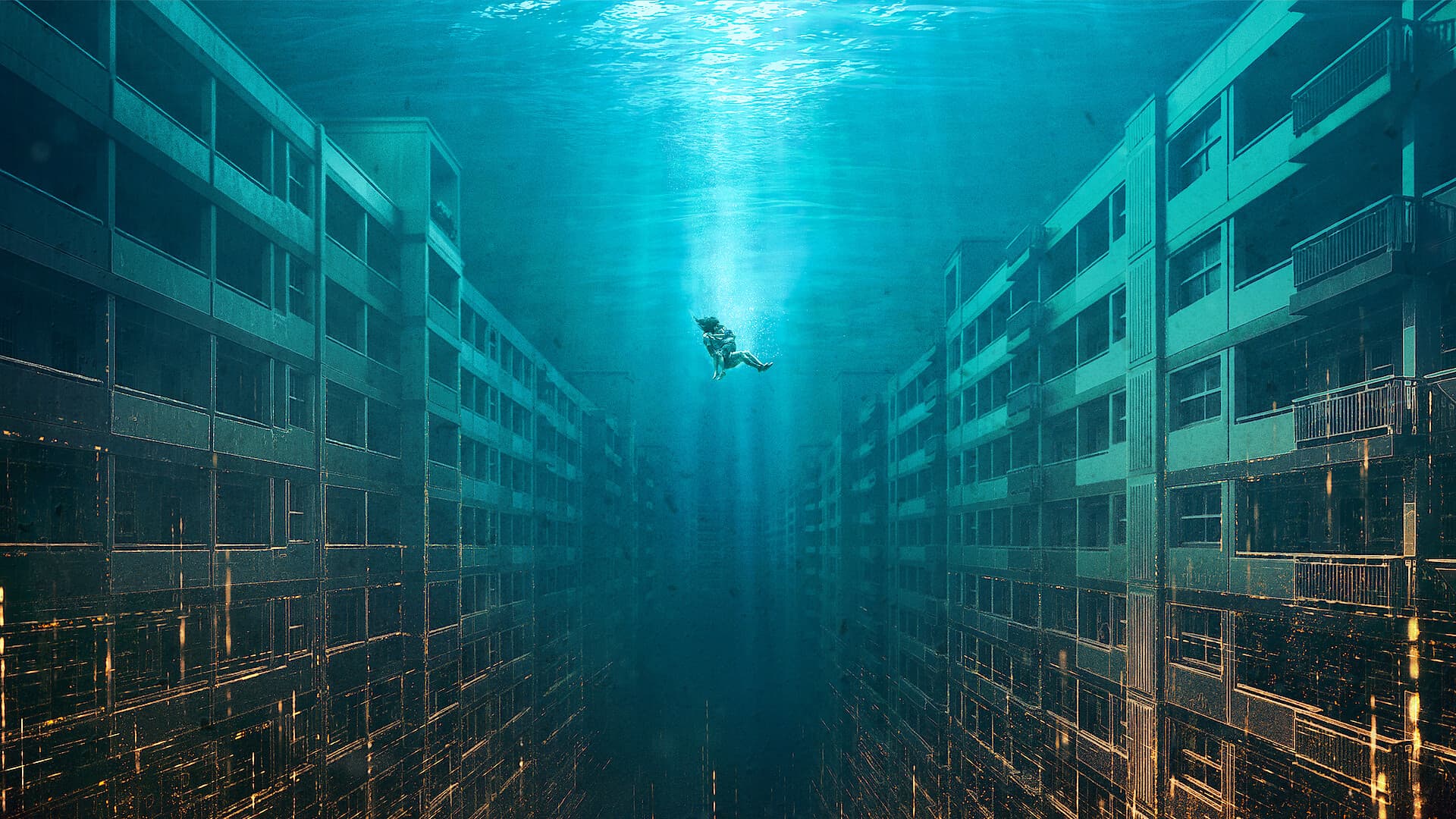
Netflix's ambitious Korean original sci-fi disaster blockbuster, 'The Great Flood,' unfolds against the terrifying backdrop of Earth's final day, triggered by the catastrophic collapse of the Antarctic ice shelves. While many films in the genre focus solely on the spectacle of destruction, this masterpiece delves deeper, exploring the rawest edges of human nature and the desperate will to survive when facing total annihilation. Backed by a massive production budget exceeding 30 billion won, the film transcends conventional disaster tropes to deliver a claustrophobic, high-stakes drama that questions what it truly means to be human when the world is ending. The narrative centers on a suffocating struggle within a high-rise apartment building that is slowly being swallowed by the rising tides—a familiar sanctuary turned into a watery tomb. Anna (played by Kim Da-mi), a brilliant AI researcher, finds herself trapped in this vertical labyrinth, fighting tooth and nail to save her young son. As the water level rises floor by floor, the tension becomes palpable, turning time itself into a deadly enemy. Into this chaos enters Hee-jo (played by Park Hae-soo), a member of a security team dispatched ostensibly to rescue survivors. However, his presence introduces a layer of menacing ambiguity; he is both a potential savior and a dangerous variable, creating a dynamic of mistrust and suspense that drives the plot forward. Anna is far more than a damsel in distress; she represents the future of humanity. As a key figure in artificial intelligence research, she holds the potential for rebuilding civilization, placing her at a cruel crossroads between her professional mission and her primal instinct as a mother. This conflict serves as the film's emotional core, raising profound philosophical questions about the value of individual life versus the collective future of the species. The interplay between Anna's intellect and her maternal ferocity provides a rich, emotional texture to the relentless action. Directed by Kim Byung-woo, a filmmaker renowned for his mastery of confined thrillers like 'The Terror Live' and 'PMC: The Bunker,' the movie utilizes the shrinking space of the apartment to maximize psychological pressure. Filmed over six months with cutting-edge visual effects, the depiction of the flood is not just a background element but a character in itself—relentless, cold, and all-consuming. The cinematography captures the murky, chaotic beauty of the underwater sequences, setting a new visual standard for Korean cinema. 'The Great Flood' is poised to be a landmark release that elevates the quality of Korean OTT content globally. While it delivers the heart-pounding action expected of a blockbuster, it also lingers in the mind as a cautionary tale about climate catastrophe and ethical dilemmas. The chemistry between Kim Da-mi and Park Hae-soo anchors the fantastical elements in gritty reality, ensuring that even amidst the CGI spectacle, the human story remains poignant and powerful. It is a survival thriller that demands to be witnessed, promising to leave audiences breathless long after the credits roll.