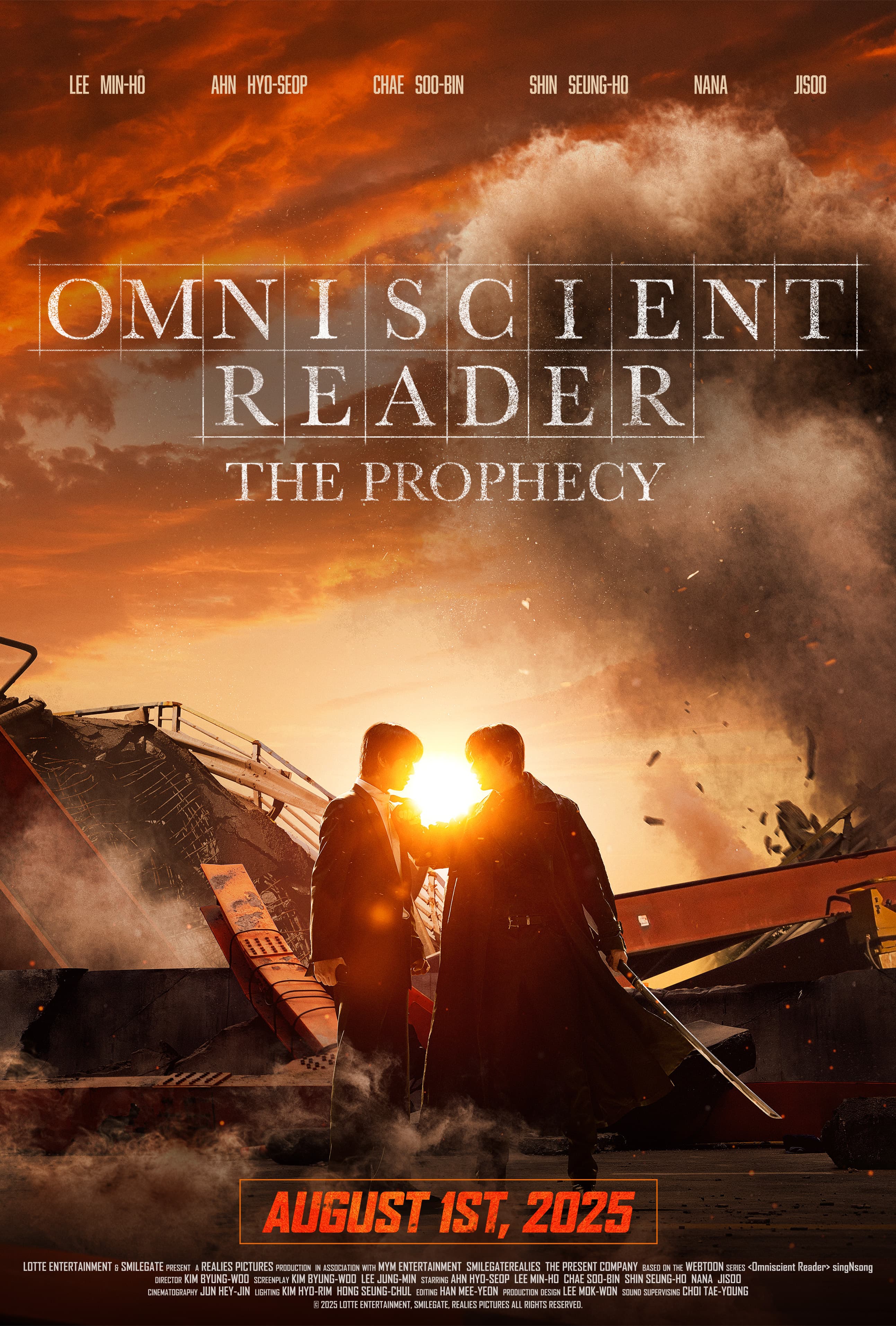
It begins on an ordinary commute home, deep within the tunnels of Seoul’s Subway Line 3. Kim Dok-ja is an average contract worker whose sole escape from a mundane life is reading. For over a decade, he has been the only devoted reader of an obscure web novel titled *Three Ways to Survive the Apocalypse* (TWSA). Just as he finishes the final chapter of this 3,149-episode epic, the fiction bleeds into reality. A grotesque 'Dokkaebi' (goblin) named Bi-hyeong materializes in the subway car, announcing the start of a deadly 'Main Scenario.' In an instant, the familiar sights of Seoul—from the Han River to Gwanghwamun Plaza—are transformed into a hellscape of monsters and mayhem. Amidst the panic, Dok-ja realizes a terrifying truth: he is the only person who knows exactly how this world ends. *Omniscient Reader: The Prophecy* brings the colossal worldview of the hit webtoon to life with breathtaking scale. Kim Dok-ja (played by Ahn Hyo-seop) is not a warrior by trade, but he wields the ultimate weapon: knowledge. Holding the 'strategy guide' to the apocalypse, he navigates the chaos, eventually crossing paths with the novel’s original protagonist, Yoo Joong-hyuk (Lee Min-ho). Joong-hyuk is a 'Regressor' who has lived through tragic deaths countless times, losing his humanity in the process. The tension between Dok-ja, who wants to change the story, and Joong-hyuk, who is trapped by it, forms the emotional core of the film. Together with a diverse group of survivors including the quick-witted Yoo Sang-ah (Chae Soo-bin) and the fierce swordfighter Lee Ji-hye (Jisoo), they fight not just for survival, but to rewrite destiny itself. The film masterfully explores meta-fictional themes that blur the line between audience and performer. High above, transcendent beings known as 'Constellations' watch the humans' desperate struggles as entertainment, donating coins to their favorites in a dark satire of modern live-streaming culture. This dynamic questions the cost of survival and the morality of voyeurism. Dok-ja’s journey is one of redemption; by using his prophetic knowledge, he attempts to save those destined to die, challenging the cruel 'Scenario' system. The visual effects are spectacular, particularly the heart-pounding sequences involving the Ichthyosaurs in the Han River and the tactical battles within the claustrophobic subway stations. Director Kim Byung-woo utilizes the urban landscape of Seoul to grounding effect, turning everyday locations into battlegrounds that feel disturbingly real. The contrast between Ahn Hyo-seop’s nuanced portrayal of a calculating reader and Lee Min-ho’s explosive, physical performance creates a compelling duality. Since its release, the film has dominated global charts, proving the universal appeal of Korean fantasy. It stands as a testament to the power of storytelling, suggesting that a single reader has the power to change the world. For travelers and film buffs alike, *Omniscient Reader* offers a unique lens through which to view Seoul. It transforms the city's modern infrastructure into a stage for mythic heroism. After watching, a simple subway ride across the Dongho Bridge feels like an adventure, and the city skyline hints at hidden stories waiting to be uncovered. This is more than an action movie; it is an immersive invitation to step inside the story and become a witness to the prophecy yourself.
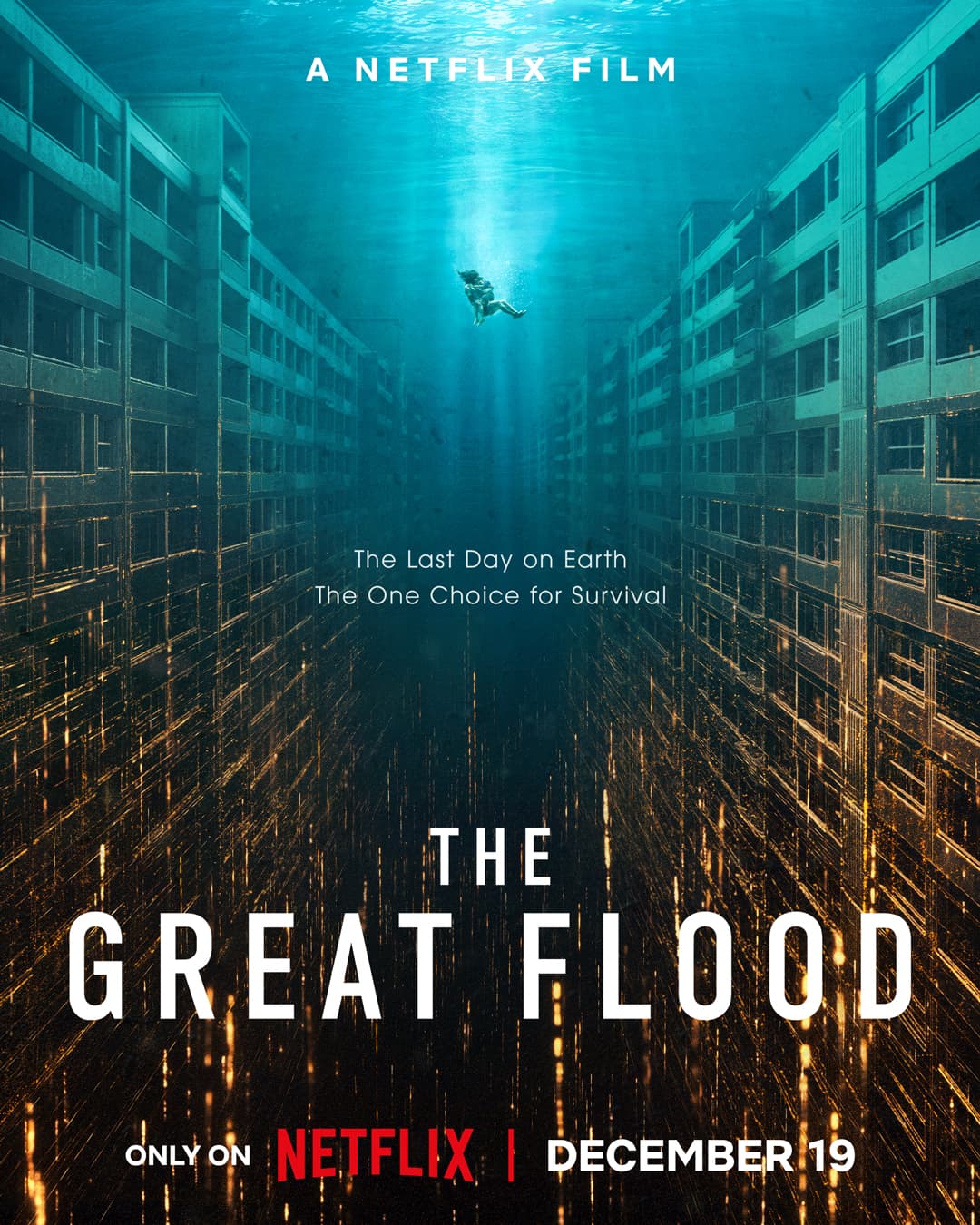
Netflix's ambitious Korean original sci-fi disaster blockbuster, 'The Great Flood,' unfolds against the terrifying backdrop of Earth's final day, triggered by the catastrophic collapse of the Antarctic ice shelves. While many films in the genre focus solely on the spectacle of destruction, this masterpiece delves deeper, exploring the rawest edges of human nature and the desperate will to survive when facing total annihilation. Backed by a massive production budget exceeding 30 billion won, the film transcends conventional disaster tropes to deliver a claustrophobic, high-stakes drama that questions what it truly means to be human when the world is ending. The narrative centers on a suffocating struggle within a high-rise apartment building that is slowly being swallowed by the rising tides—a familiar sanctuary turned into a watery tomb. Anna (played by Kim Da-mi), a brilliant AI researcher, finds herself trapped in this vertical labyrinth, fighting tooth and nail to save her young son. As the water level rises floor by floor, the tension becomes palpable, turning time itself into a deadly enemy. Into this chaos enters Hee-jo (played by Park Hae-soo), a member of a security team dispatched ostensibly to rescue survivors. However, his presence introduces a layer of menacing ambiguity; he is both a potential savior and a dangerous variable, creating a dynamic of mistrust and suspense that drives the plot forward. Anna is far more than a damsel in distress; she represents the future of humanity. As a key figure in artificial intelligence research, she holds the potential for rebuilding civilization, placing her at a cruel crossroads between her professional mission and her primal instinct as a mother. This conflict serves as the film's emotional core, raising profound philosophical questions about the value of individual life versus the collective future of the species. The interplay between Anna's intellect and her maternal ferocity provides a rich, emotional texture to the relentless action. Directed by Kim Byung-woo, a filmmaker renowned for his mastery of confined thrillers like 'The Terror Live' and 'PMC: The Bunker,' the movie utilizes the shrinking space of the apartment to maximize psychological pressure. Filmed over six months with cutting-edge visual effects, the depiction of the flood is not just a background element but a character in itself—relentless, cold, and all-consuming. The cinematography captures the murky, chaotic beauty of the underwater sequences, setting a new visual standard for Korean cinema. 'The Great Flood' is poised to be a landmark release that elevates the quality of Korean OTT content globally. While it delivers the heart-pounding action expected of a blockbuster, it also lingers in the mind as a cautionary tale about climate catastrophe and ethical dilemmas. The chemistry between Kim Da-mi and Park Hae-soo anchors the fantastical elements in gritty reality, ensuring that even amidst the CGI spectacle, the human story remains poignant and powerful. It is a survival thriller that demands to be witnessed, promising to leave audiences breathless long after the credits roll.