Jeongseon, Where the Mountains Remember
Disney+'s Goldland looks into the gold-mining valleys of Gangwon

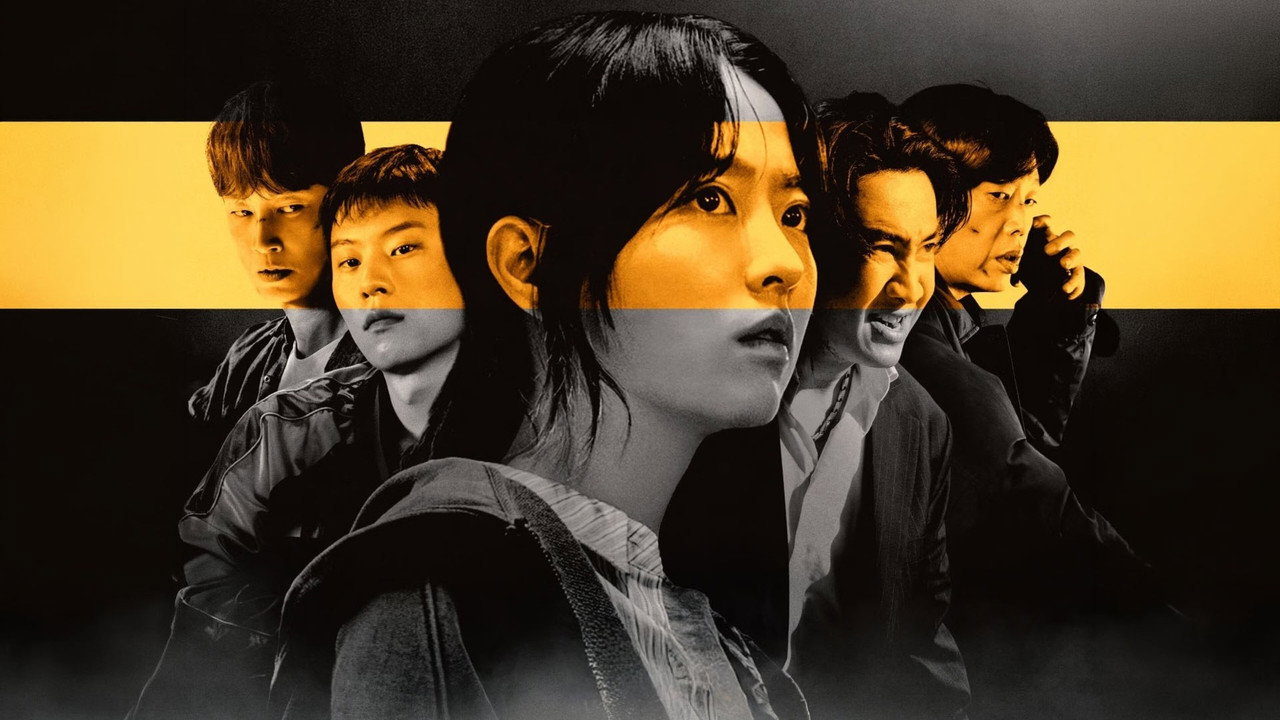
Even where the gold has left, the mountains remain.
Landscape as Memory
Goldland is a drama that has buried itself deep in its landscape. Jeongseon, Gangwon Province. Once a mining boomtown, this narrow valley in the Taebaek range is somewhere Korean television has barely looked at in twenty years. Into it arrives Park Bo-young's Hee-ju, and the single gold bar she stumbles into pulls the desire of an entire town toward her.
Jeongseon doesn't look like anywhere else in the Korean drama catalogue. Three hours from Seoul by car. The spine of the Baekdudaegan drops here into tight gorges and turns into rivers. The villages tucked between are neither metropolis, beach, nor familiar countryside. Disney+ chose this site for a reason: to set its characters against a texture viewers have not seen. When a story unfolds against familiar backgrounds, it follows the grammar of its genre; in an unfamiliar place, even the genre pauses and takes a long look at where it is.
The landscape does not absorb the characters' emotion. It watches them coolly.
Lee Kwang-soo, Kim Sung-cheol, Kim Hee-won, Moon Jeong-hee, and Lee Hyun-wook distribute the town's hunger between them. Whenever they gather, the mountains are in frame. Jeongseon's landscape does not absorb the characters' emotion; it watches them coolly. Director Kim Sung-hoon places warm bodies on top of that coolness. Wide shots are frequent, but close-ups are never withheld. When the wide frame shows the town's stillness, the tight frame catches the desire boiling inside it. Between these two perspectives, the town of Jeongseon becomes a co-lead of the whole production.
Hwaam Cave: Where the Memory of Gold Sleeps Among the Stalactites
The mining heritage isn't backdrop decoration. The valleys around Jeongseon still hold traces of operations that ran from the colonial period into the 1990s, sealed shafts, miner housing, and most strikingly the Hwaam Cave in Dong-myeon.
Hwaam Cave was originally the Cheonpo gold mine; today it is the only theme-based cave in Korea, opened to visitors. Inside, old excavation tunnels and gold-mining relics are displayed among the stalactites, the most direct illustration of what the title Goldland compresses. While the characters chase a single bar of gold, the camera watches the mountains that gave up decades of it. The cave runs approximately 1.8 kilometres from entrance to end. The walk inward feels like descending from the 21st century on the surface down into the time of the miners.
Gold brought wealth to Jeongseon, but the wealth did not last. After the mines closed, the town slowly emptied, and what remained was the mountains, the rivers, and the stories of those who could not leave. The hunger in Goldland grows out of that empty space. When a single gold bar makes the town boil again, it is a 21st-century event and, at the same time, an echo of a century before.
Jeongseon Arirang Market: Proof That the Town Is Still Alive
The result is that the town becomes a co-lead. Landscape does not overwhelm character, and character does not domesticate landscape. They stand on the same time. While someone in the 21st century looks for gold again, the mountains keep the shape they had yesterday.
To travel Jeongseon is to walk both of those times at once. The Jeongseon Arirang Market is a five-day market held on dates ending in 2 and 7, one of the most celebrated mountain markets in the country. The medicinal herbs raised by the clean peaks of the Baekdudaegan fill the stalls: gondre, milk vetch, deodeok, and through them runs the winding melody of the local Arari song. If the gold mine was the town's past, this market is proof that the town is still alive.
Inside the market, the rough hands of grandmothers selling mountain greens and old bronze weighing tools sit side by side on the stalls. Carry a bundle of gondre through the lanes and the drama's sense of Jeongseon's "living time" becomes something you feel rather than watch. A bowl of gondre rice at one of the iron-cauldron diners inside the market is one of the most honest ways to understand this town.
Auraji: Where Two Streams Come Together
The Auraji in Yeoryang-myeon is another face of Jeongseon, the point where two streams, the Gujeolcheon and the Goljicheon, merge into one. The name "Auraji" itself comes from a word meaning "to come together." Long ago, log rafts set out from here to carry timber all the way to the Han River, and it was on those journeys that the Jeongseon Arirang was sung. If Goldland is a drama of desire over gold, the Auraji is the memory of the labor and song that moved this land long before that desire arrived.
What Jeongseon remembers is not the gold, but the time of the people who mined it, and lost it.
At the confluence stands a statue of a young woman. It comes from the story of a woman who waited on the far bank while her man floated away on a raft, a farewell captured in one of the verses of the Jeongseon Arirang. If the drama is about waiting over gold, the Auraji is where a far older song of waiting began. In the early morning, when mist rises over the junction of the two rivers, the scene looks most like the wide shots the drama returns to again and again.
Jeongseon Rail Bike: Passing Through the Valley With Your Body
The Jeongseon Rail Bike, departing from Gujeol-ri, is another way to read the mountains with your body. Pedalling 7.2 kilometers down a disused railway line, you pass directly through the narrow, drawn-out valley the drama captures in its wide shots. You go down on the rail bike and return on a scenic train, seeing the same route at two speeds. Strangely, that structure resembles the drama's own gaze, which lays the past and the present over one another.
The rail bike course follows the Joyang River along the northern edge of Jeongseon County. Mountains press close on both sides of the tracks, and the sound of the water runs alongside the sound of the pedals. In the tunnel sections, changing lights evoke the atmosphere of a mining shaft once used by men carrying ore. The route is not directly connected to any specific mine's history, but the fact that this railway line survived alongside the mine economy for so long means the drama's air is present for the whole ride.
What the Inconvenience Has Preserved
For a traveller, Jeongseon is not an easy destination. Mugunghwa from Cheongnyangni runs about three and a half hours; the KTX requires a Pyeongchang transfer. Even by car, you drive a long way into the mountains. But that inconvenience is precisely what Jeongseon has kept. Because it is hard to reach, the landscape stays with you longer once you arrive.
If you are planning a visit, time it to the market days. Spend a day at the Jeongseon Arirang Market on the 2nd or the 7th; descend the next day into mining time at Hwaam Cave; then stand at the Auraji where the two streams meet. Rail bike schedules change with the season, so it is best to check in advance. The cave maintains an interior temperature of around 15°C year-round, so even in midsummer you will want a light jacket.
Take that long thin road in, and the drama's choice begins to explain itself. Landscape doesn't answer your questions. It just keeps standing in the same place. Even where the gold has left, the mountains remain. What Jeongseon remembers is not the gold, but the time of the people who mined it, and lost it.
Filming Locations
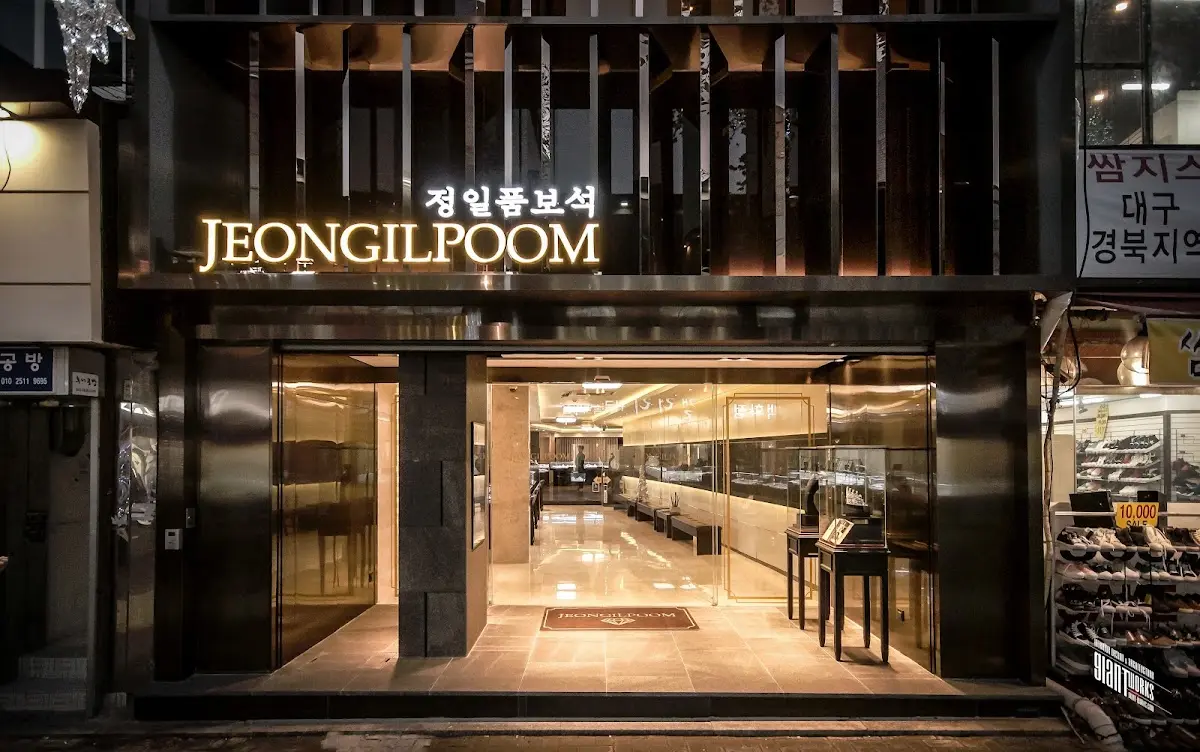
정일품보석 대구 중구 교동 동성로
A jewellery and wedding-gift shop in the Gyodong gold district of Daegu, open since 1977 and now run by the second generation. The shop itself confirmed it was a filming location. It shows what a drama about gold borrowed from a working gold alley.
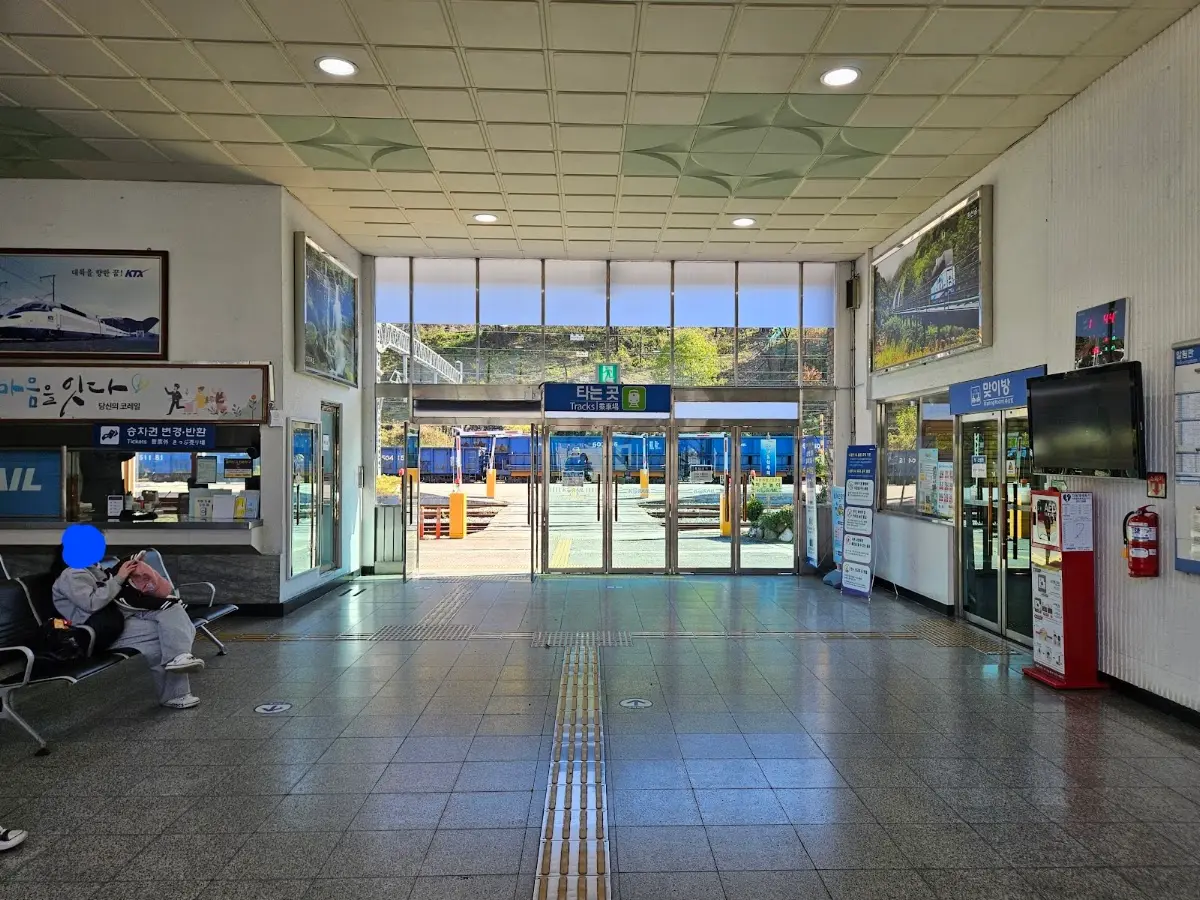
삼척 도계역 강원 삼척시 도계읍 도계로 222
The station in the old mining country that appears in episodes 1 and 2. Dogye really did dig coal, so the harsh noir palette comes from the terrain rather than a set.
태백시 번영로 강원 태백시 황지동
Beonyeong-ro in Hwangji-dong, Taebaek. With Dogye station it forms the mining-country sequence of episodes 1 and 2. The shopping lane that once teemed with miners becomes the backdrop as it is.
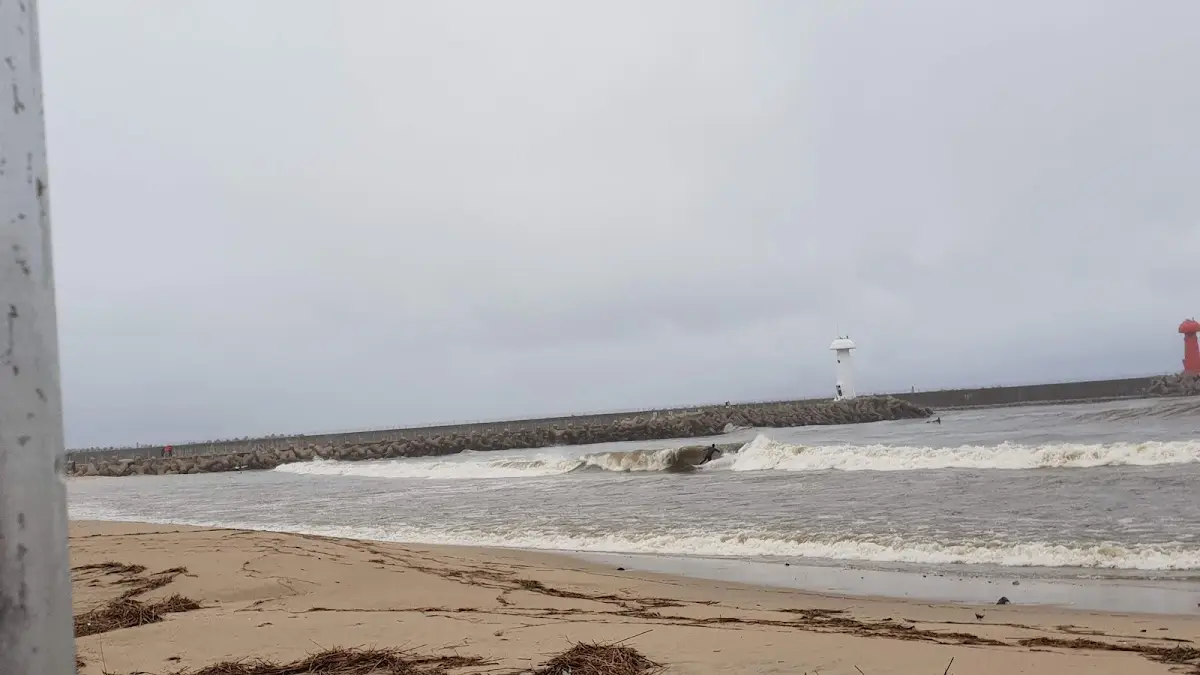
물치교 강원 양양군 강현면 물치리
The bridge at Mulchi-ri in Yangyang, used for the sequences moving out to the Gangwon east coast. Mulchi harbour below and the Seorak ridgeline land in the same frame.
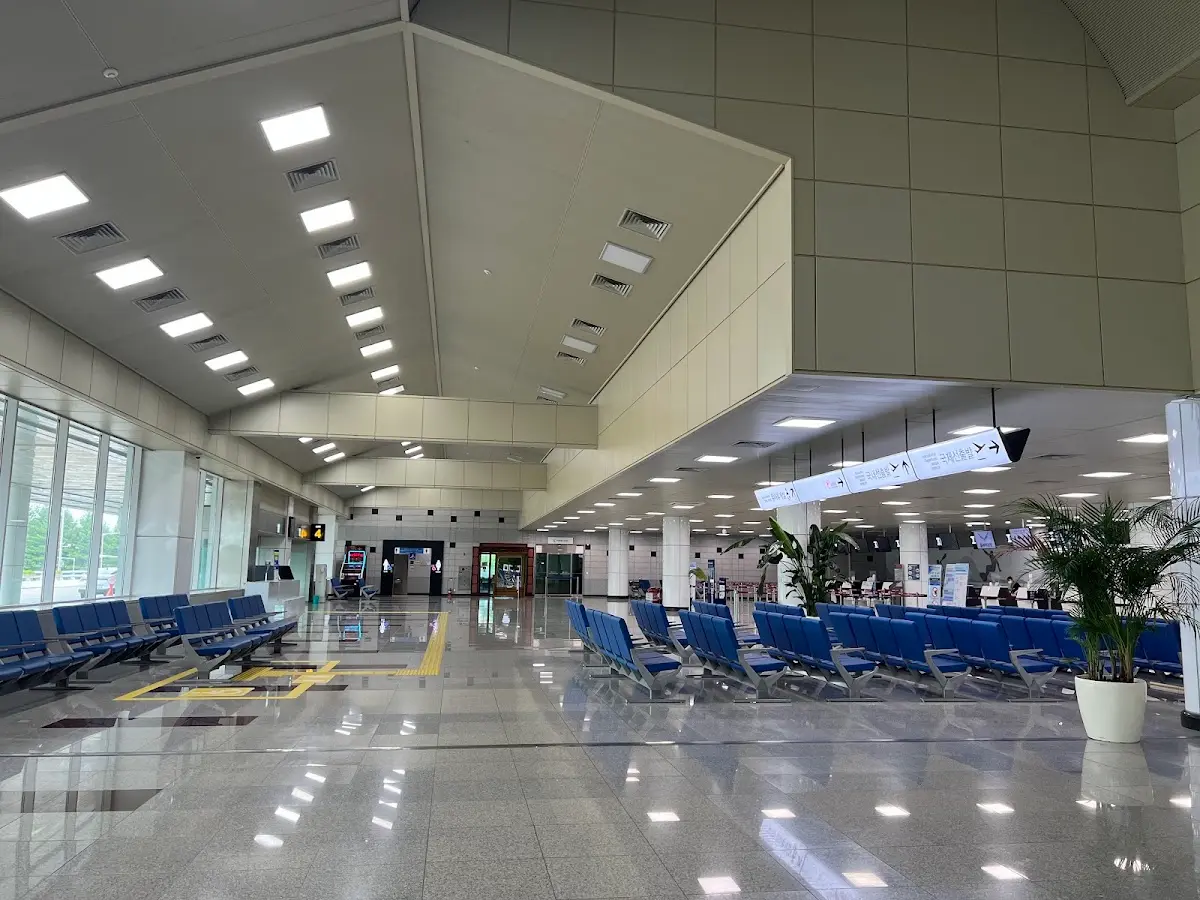
양양국제공항 강원 양양군 손양면 공항로 201
The airport scenes in episodes 1 and 2. Traffic here is light, which makes a controlled frame easy to get, and that emptiness happens to fit the show's cold mood.
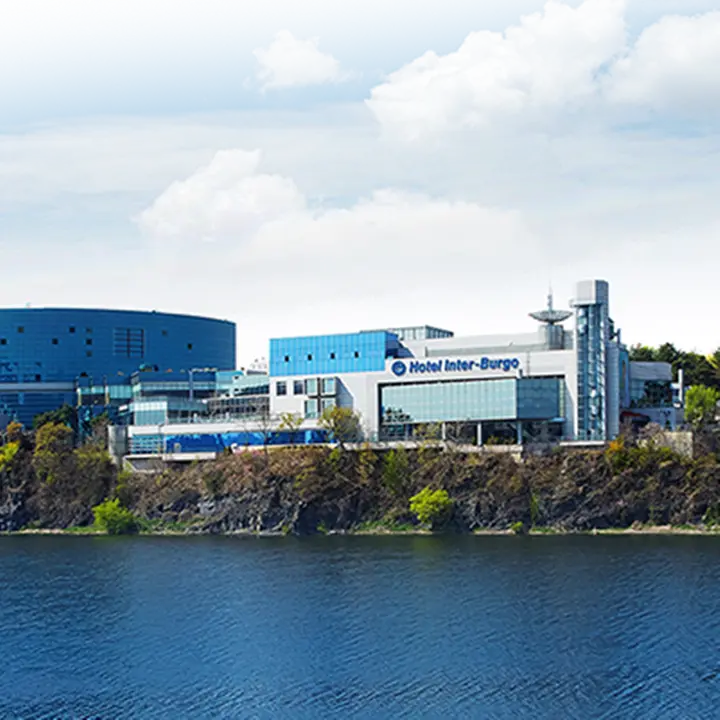
호텔인터불고 대구 수성구 팔현길 342
The Goldland Hotel of the story, the stage for the deals and meetings that revolve around gold. The Daegu portion of the shoot ties together this hotel and the jewellery alley.
Also Nearby
Jeongseon Arirang Museum
A museum tracing the origins, evolution, and spread of the Jeongseon Arirang folk song through documents, recordings, and exhibits. Located near the market in the town centre, it pairs naturally with a visit on a five-day market day. Understanding how the Arirang was born in these narrow valleys and carried outward adds depth to the air the drama breathes.
Within walking distance of the market on five-day market dates (2nd, 7th). Allow around 40-60 minutes for the visit.
Hwaam Mineral Spring
A natural carbonated mineral spring close to Hwaam Cave, rich in iron and carbonate minerals and long regarded locally as beneficial for the stomach. It connects naturally to the cave via a forest walk after your tour. Rice cooked in the mineral water (a regional specialty) and drinking the water straight from the source are both worth trying.
Hwaam Cave ticketing often includes the spring walk as part of the same scenic route. The water is best tasted fresh on-site.
Auraji Ferry Crossing and Maiden Statue
The small ferry crossing at the Auraji confluence (where the Gujeolcheon and Goljicheon streams meet) alongside the statue of a maiden that embodies the farewell story behind the Jeongseon Arirang. A small wooden ferryboat still crosses the water. This is the most intuitive place to feel the emotional texture the drama draws on (old waiting, a river, the memory of rafts). Visit at dawn with mist on the water for the most striking scene.
Ferry operation depends on weather and season. The riverside path by the statue is free and open year-round.
Jeongseon Alpine Ski Resort
The venue that hosted the alpine skiing events of the 2018 PyeongChang Winter Olympics, located near the Gujeol-ri Rail Bike departure point. Since the Games it has been open to the public for slope experiences and viewpoint access. Combining it with the rail bike makes for a full day in northern Jeongseon. Off-season, mountain cart activities are sometimes offered.
Skiing operates in winter season only (approx. December-March). For other seasons, check the official site in advance for viewpoint and activity availability.
Jeongseon Gondre Rice Restaurant Quarter
The cluster of gondre rice restaurants around the Arirang Market in Jeongseon town. Gondre is a mountain vegetable that grows in the high altitudes of the Baekdudaegan, and gondre rice (cooked in a cast-iron pot and eaten mixed with perilla oil and soy sauce) is the most representative local dish of Jeongseon. On five-day market days, queues form outside every restaurant in the quarter.
On five-day market days (dates ending in 2 or 7), arrive before noon to avoid the longest queues. The iron-cauldron diners inside the market itself are also an excellent option.
Plan Your Visit
Getting there Mugunghwa train from Cheongnyangni Station, approx. 3 hrs 30 min; or by car from Seoul, approx. 3 hrs. KTX riders transfer at Pyeongchang Station and continue by bus.
Best season Spring (Apr-May) or autumn (Oct-Nov) for peak mountain colour. Hwaam Cave is open year-round (interior ~15°C, bring a light jacket).
Time needed 2 nights / 3 days recommended: Jeongseon Arirang Market (open on days ending in 2 or 7) → Hwaam Cave in Dong-myeon (~90 min tour) → Auraji confluence in Yeoryang-myeon (free walk) → Gujeol-ri Rail Bike (round trip ~90 min).
Admission & access Hwaam Cave: paid entry (check current rates). Jeongseon Arirang Market: free. Auraji: free. Rail Bike: paid; advance booking recommended as slots fill quickly on weekends.