Where the Names Return
Four landscapes through which Jeong Ji-young's My Name Is moves toward the Jeju Uprising of 1948

Standing before a wall where each life is compressed into a single line, you understand at once why the film took "name" as its title.
Before a Wall of Names: Jeju April 3 Peace Park
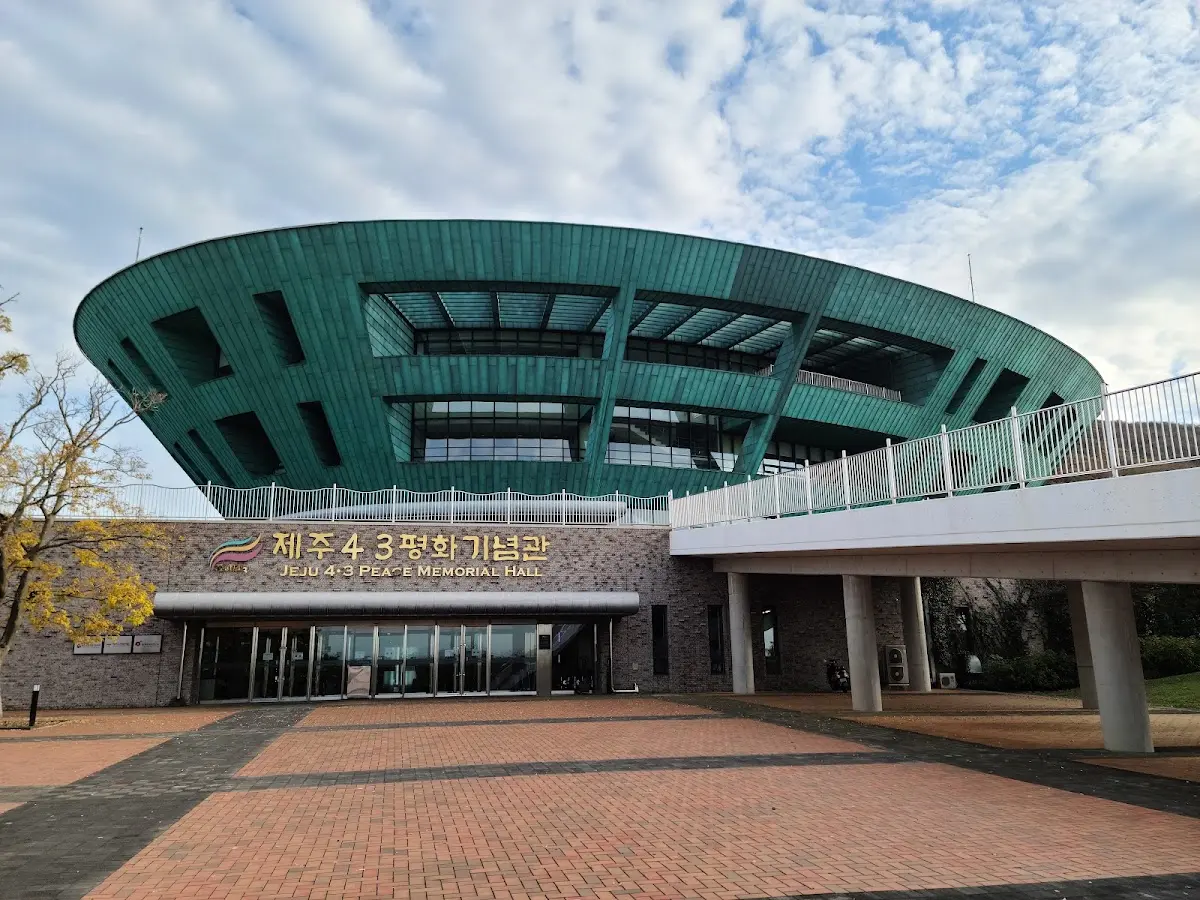
The film opens at a memorial park in Jeju City. The April 3 Peace Park honors the victims of one of South Korea's most violent and least-discussed atrocities, the suppression that began in 1948 and bled into the early 1950s. Before filming, director Jeong Ji-young brought his crew here for a memorial ceremony. That gesture sets the tone for everything that follows. My Name Is doesn't treat the tragedy as material. It kneels on the ground and listens.
The Peace Park is more than a backdrop. A ring-shaped corridor unfolds around the central memorial tower, and along that corridor stand the stone tablets of the dead. Inscribed on them are the names, sexes, ages, and dates and places of death of more than thirteen thousand victims, arranged village by village. Standing before a wall where each life is compressed into a single line, you understand at once why the film took "name" as its title. April 3 is not an event of numbers. It is an event of names.
Standing before a wall where each life is compressed into a single line, you understand at once why the film took "name" as its title.
The park is larger than first-time visitors expect. Spread across a site of over 140,000 pyeong, it encompasses the Memorial Plaza, the Ossuary, the inscribed stone tablets, and a sculpture garden, each arranged in deliberate sequence. The ossuary enshrines memorial tablets for the victims; the adjacent April 3 Memorial Hall traces the events in chronological order. There is a clear reason to see the film before visiting here: the history the park displays wraps around Jeong-sun's story, giving it deeper context and weight.
A Village That Holds 1948: Jeju Folk Village Museum
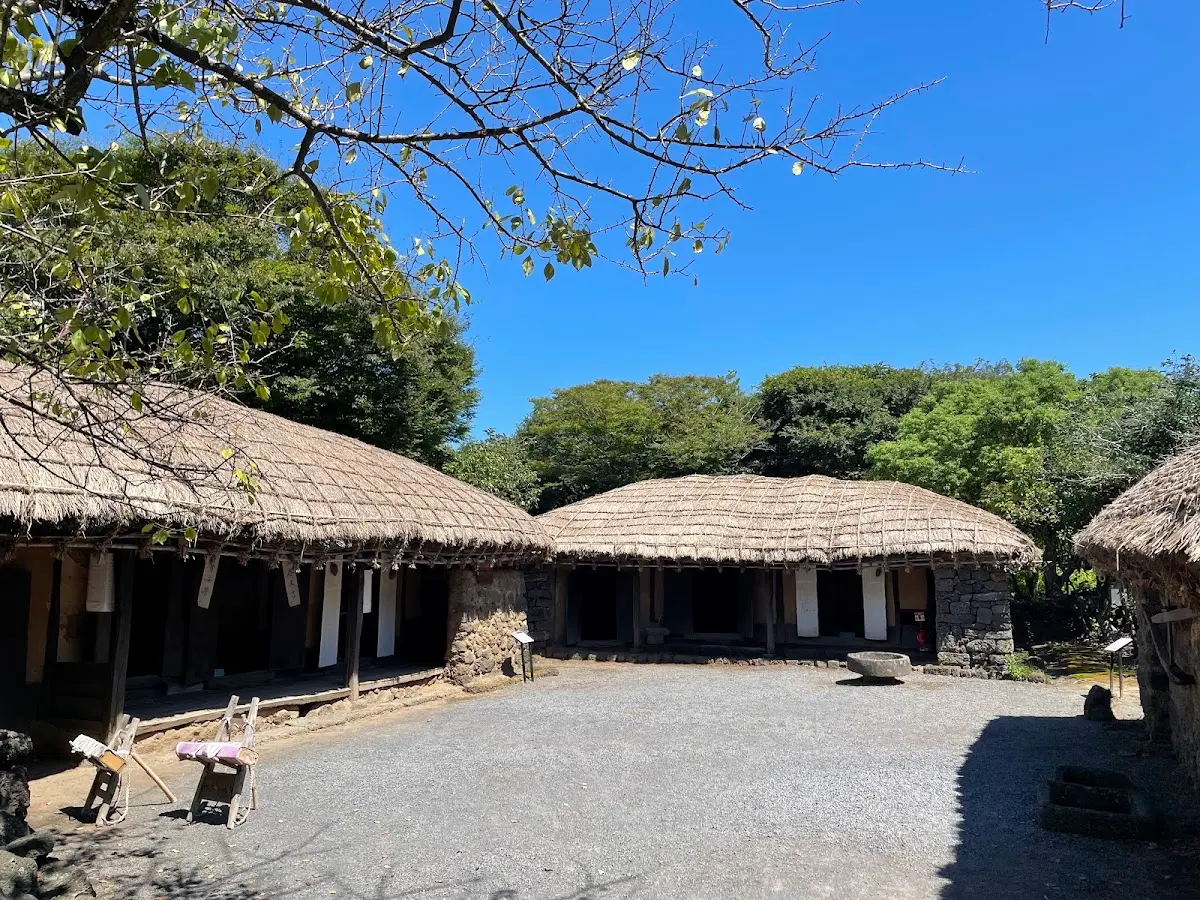
The Jeju Folk Village in Seogwipo's Pyoseon-myeon is where 1948-49 lives in the film. Opened in 2001, this open-air museum reconstructs more than a hundred traditional Jeju houses, set to a baseline of the 1890s. The stones and pillars of homes islanders actually lived in were carried here and raised again. Thatched roofs, stone walls, the smell of packed earth in the courtyard, the camera moves slowly through it all. Jeong chose this site specifically for its texture. No set could imitate it, and that texture governs even the way the characters breathe. Jeong-sun's childhood doesn't arrive as a stage; it arrives as memory.
The houses that make up the village are not simple replicas. Materials were dismantled from actual homes in different parts of Jeju and restored by region: coastal villages, mid-mountain villages, fishermen's houses, farmers' houses, each with its own layout and courtyard proportions. Walking slowly through this village, you feel the social layers of Jeju in your feet. Which type of house did Jeong-sun's family live in? Viewers who remember the scenes will find it another form of watching the film.
Walking the whole village takes two to three hours. Move slowly and you begin to guess which alley held which scene of the film, and that guessing is itself a way of watching. Costume rentals and folk-game programs are scattered through the grounds, making it easy for families. But if you have already seen the film, pause within that liveliness and let the stillness of 1949 return to you for a moment.
Where Two Springs Meet: The Barley Fields of Ora-dong
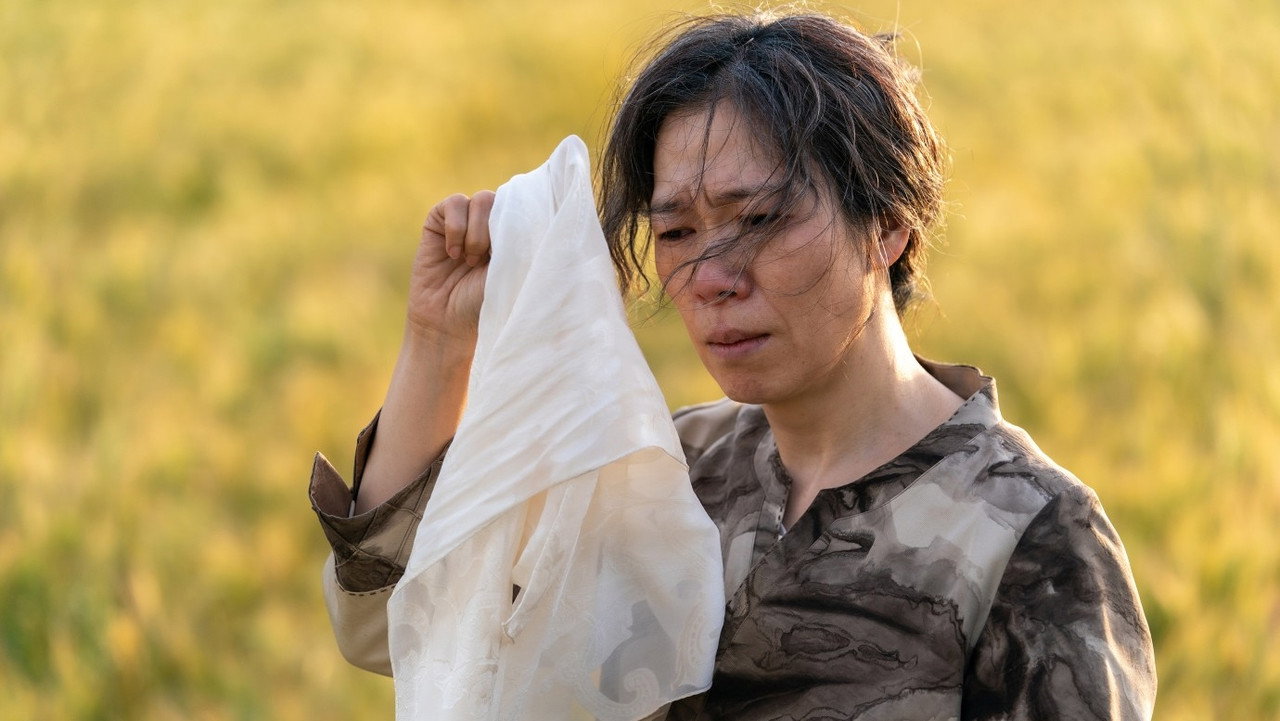
The barley fields of Ora-dong host the film's most lyrical sequence. When a spring wind lays the heads of grain over in unison, the camera holds the protagonist's face at distance. Jeong has named this field in interviews as a deliberate choice, it is his answer to how Jeju's landscape carries time on a different clock. The spring of 1949 and the spring of 1998 meet inside the same frame.
The spring of 1949 and the spring of 1998 meet inside the same frame. That is what this field gave the film permission to do.
Ora-dong is not far from central Jeju City. Along the gentle northern slope of Hallasan, barley fields and rapeseed fields alternate, peaking in April and May. It is not a groomed tourist site, no signposts, no admission fee. That, in fact, is what makes it resemble the film's gaze: it does not exhibit the landscape; it simply leaves it where it is.
The quietness of this field mirrors the structure of the film. My Name Is moves less through dramatic revelation than through quiet return. The barley-field sequence speaks in landscape: this is the speed and color of that return. For visitors who want to find the shot, early morning is best. Between eight and nine, when the light is still low and the wind moves across the field, the frame from the film re-forms in front of you.
Walking Over Strata of Memory: Jocheon-eup and Bukchon-ri
The camera ends at the coast of Jocheon-eup. One of the historical epicenters of the April 3 Uprising, this northeastern village carries the weight of the film's final act. Bukchon-ri, in particular, holds the deepest scar of all. In January 1949, over the span of just two days, some four hundred residents were massacred. In the Neobeunsungi area, the small graves of children who were never properly buried still remain, and that tragedy reached the wider world through Hyun Ki-young's novel Sun-i Samchon.
To walk Jocheon-eup is to walk over the strata of that memory. The memory of resistance and the memory of the massacre layer onto the same lanes and stone walls. When Jeong-sun puts on pink sunglasses and rides through these streets in a white car, it isn't tourism. It is return. The Neobeunsungi April 3 Memorial Hall is the gateway to that return, and the "April 3 Trail" linking the villages is a route of remembrance designed to be walked slowly.
Jocheon-eup carries one more historical layer: resistance to colonial rule. The village was where the spirit of the March 1st Movement first arrived in Jeju. Mimidongsan, a small hill within the village that served as the origin of the 1919 Jocheon Independence Rally, still stands here, so that the memory of anti-colonial resistance and the memory of April 3 share the same stone path. The film's decision to connect Jeong-sun's childhood to this village is not a simple choice of setting. It is a choice that shows how an entire land's memory can be carried inside a single life.
Two Jejus, One Frame
None of these places were built for the film. The film, instead, laid itself down on top of them. Jeong gathers seventy-eight years of time into one woman's face while remaining accountable to the landscape outside it. Wherever the camera looks, someone's name is there.
This is also a film of dark tourism. Jeju has long been an island of honeymoons and resorts. But inside that same island lies a history that was, for more than half a century, difficult to speak aloud. My Name Is layers those two Jejus onto a single frame. The brightness of pink sunglasses and the weight of the memorial tablets coexist without contradiction, and that coexistence is the courtesy the film pays to Jeju.
A Route for the Traveller
For a traveller, start at the Peace Park. It is about an hour by bus from near Jeju Airport; the outdoor grounds are always open, and the memorial hall runs from 9 a.m. to 6 p.m. Read one of the names on the wall, let the film's opening replay in your head, then move on to the Folk Village in Pyoseon-myeon and let your fingers find the texture of the period.
Next come the barley fields of Ora-dong. If you visit in spring, it is worth waiting for the moment the wind lays the barley down. That shot is in the film, and it is also in the field. And finally, Bukchon-ri in Jocheon-eup. Stop before the small graves of Neobeunsungi, and it will feel as though the film has just ended.
Walked in that order, the film begins a second time. If the first viewing followed Jeong-sun's memory, the second is the act of setting your own feet on the ground where that memory was actually buried. Where My Name Is ends, the journey begins, in the place where the names return.
Filming Locations
제주 4.3 평화공원 제주시 명림로 430
The emotional anchor of the protagonist's awakening memories. An actual memorial park for the victims of the April 3 Jeju Uprising, where director Jeong Ji-young held a solemn ceremony with the crew before production began.
제주민속촌박물관 서귀포시 표선면 민속해안로 631-34
The primary filming location for the 1948-49 period sequences. The preserved traditional thatched-roof village structures made it the ideal canvas for recreating the historical setting. The director chose this site specifically for its period authenticity.
오라동 제주시 오라이동
The barley field area of Ora-dong, one of Jeju's most recognizable natural landscapes. Specifically named by the director in interviews, it serves as the backdrop for the film's lyrical sequences bridging past and present.
조천읍 제주시 조천읍
Jocheon-eup, one of the historical epicenters of the April 3 Uprising. This northeastern Jeju coastal village has deep roots in the independence movement and serves as a key backdrop for the film's historical sequences.
Also Nearby
Jeju National Museum
A national museum a ten-minute drive from the April 3 Peace Park. The permanent collection spans Jeju's history from prehistoric times through the Joseon period, with exhibits on the Tamna Kingdom and the island's distinctive haenyeo diving culture. Recommended for visitors who want to situate April 3 within the broader arc of Jeju's history.
Closed on Mondays. Admission is free; open 9 a.m. to 6 p.m. A good afternoon stop after the Peace Park.
Seongeup Historic Folk Village
A living historic village about 15 kilometres north of the Folk Village Museum, where residents still inhabit traditional thatched-roof homes among stone walls. Once the administrative seat of Joseon-era Jeongeui County, the village is designated as a National Folk Cultural Heritage site, offering traditional architecture not as reconstruction but as continuous habitation.
The village is freely accessible. Residents still live here, so quiet, respectful movement is appreciated. Spring and autumn are the best seasons for walking.
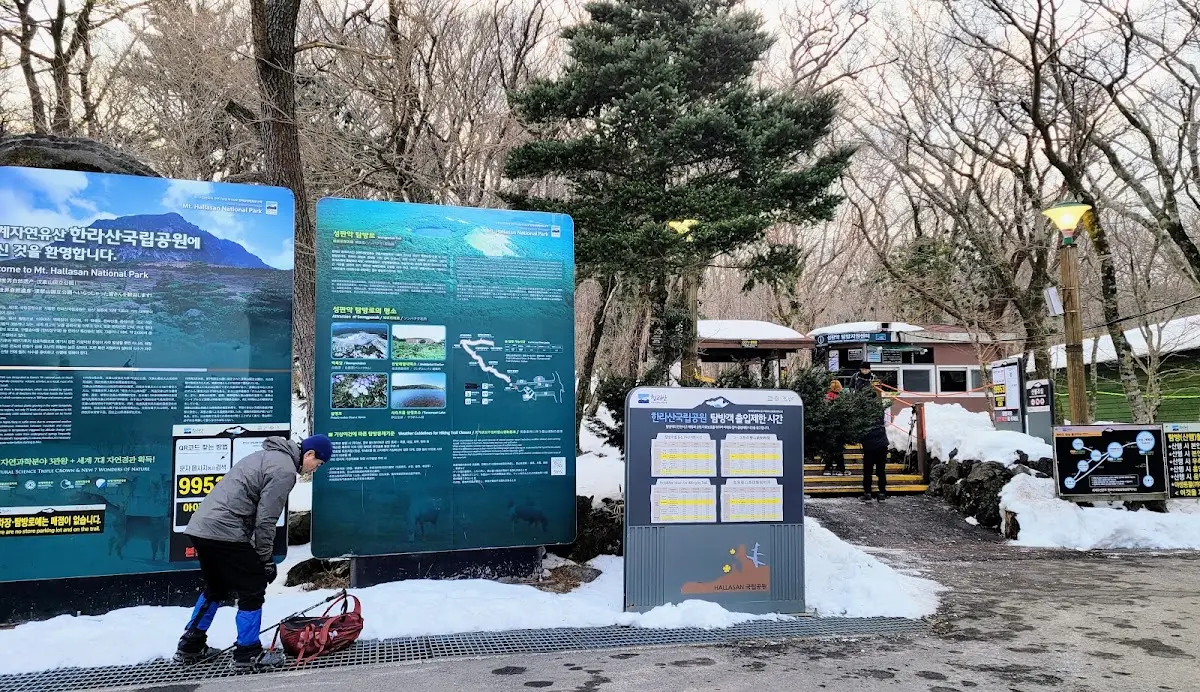
Hallasan Eorimok Trail
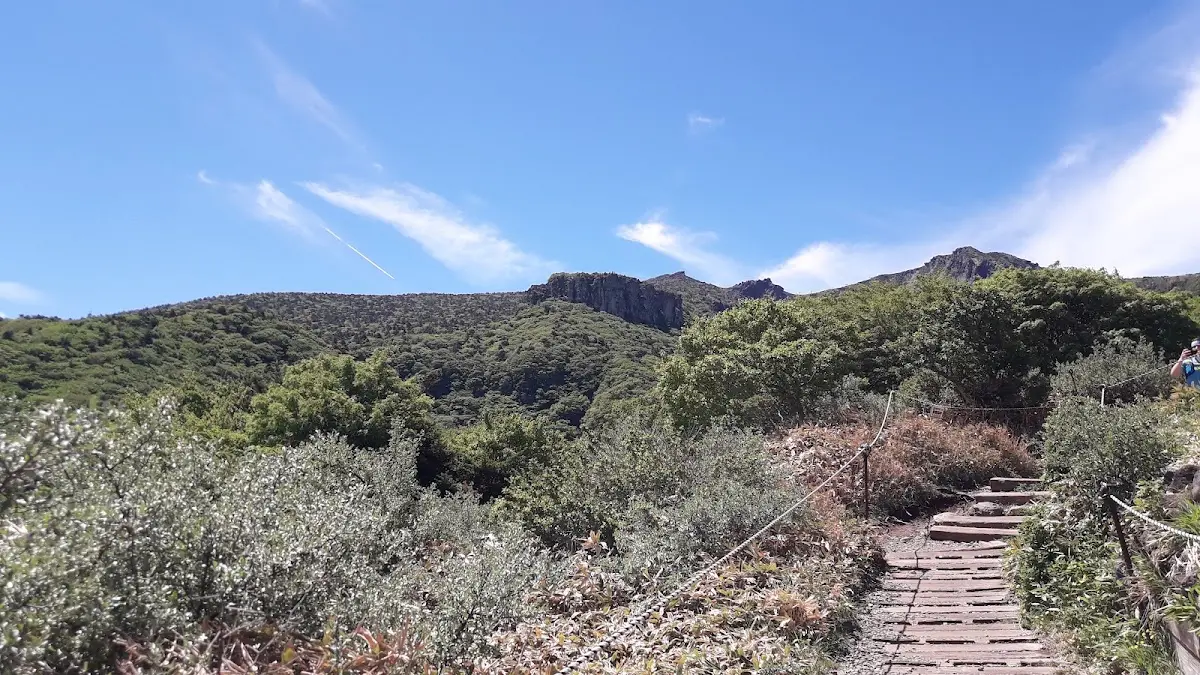
The main trailhead on the northern flank of Hallasan, near the barley fields of Ora-dong. Starting from the Eorimok Visitor Center, the route extends toward Yeongsil and offers sweeping views of Hallasan's slopes alongside striking changes in vegetation with altitude. Recommended for travellers who want to experience, up close, the mountain that frames the film's lyrical barley-field sequences.
The Eorimok-Witseoreum section is a 2-3 hour return walk. Entry times are restricted. Check the national park website before visiting. Azaleas bloom through April and May.
Neobeunsungi April 3 Memorial Hall
A memorial hall at Neobeunsungi in Bukchon-ri, Jocheon-eup, documenting the January 1949 Bukchon massacre and honoring its victims. This is the location where the film's portrayal of Jeong-sun's return resonates most directly. The site includes preserved outdoor graves of children who were never properly buried, memorial monuments, and interior exhibitions. It is also the historical setting of Hyun Ki-young's novel *Sun-i Samchon*.
Free admission. Open 9 a.m. to 6 p.m. (5 p.m. in winter); closed Mondays. Follow the '4, 3 Trail' signposts around the village for a slow walk through the commemorative route.
Hamdeok Beach
A shallow, emerald-water sandy beach near Jocheon-eup, about ten minutes by car from the Neobeunsungi Memorial Hall. One of the signature beaches of Jeju's northeastern coast, it lets you see the color of the sea that frames the film's Jocheon sequences. A place to set down the weight of memory and simply face the ocean.
Beach entry is free; parking gets crowded in peak summer (July-August). Spring and autumn offer a quieter experience. Cafés and restaurants line the coastal road.
Plan Your Visit
Getting there: Start at the April 3 Peace Park, about 1 hour by bus from Jeju Airport. The Folk Village in Pyoseon-myeon is 1.5 hours by bus or 40 minutes by rental car from the airport. A rental car is most practical for Ora-dong and Jocheon-eup.
Best season: April-May. The barley and rapeseed fields peak, the weather is mild, and commemorative events take place around April 3rd.
Time needed: Allow at least 2 days to visit all four locations. The Peace Park and Folk Village alone can fill a full day (5-6 hours).
Admission and access: Peace Park (outdoor grounds free; memorial hall free, 09:00-18:00), Jeju Folk Village (paid entry, 09:00-18:00), Ora-dong barley fields (free, open land), Neobeunsungi April 3 Memorial Hall (free, 09:00-18:00, closed Mondays).