Two Lakes, One Name
The legend began at one reservoir. The film was made at another.

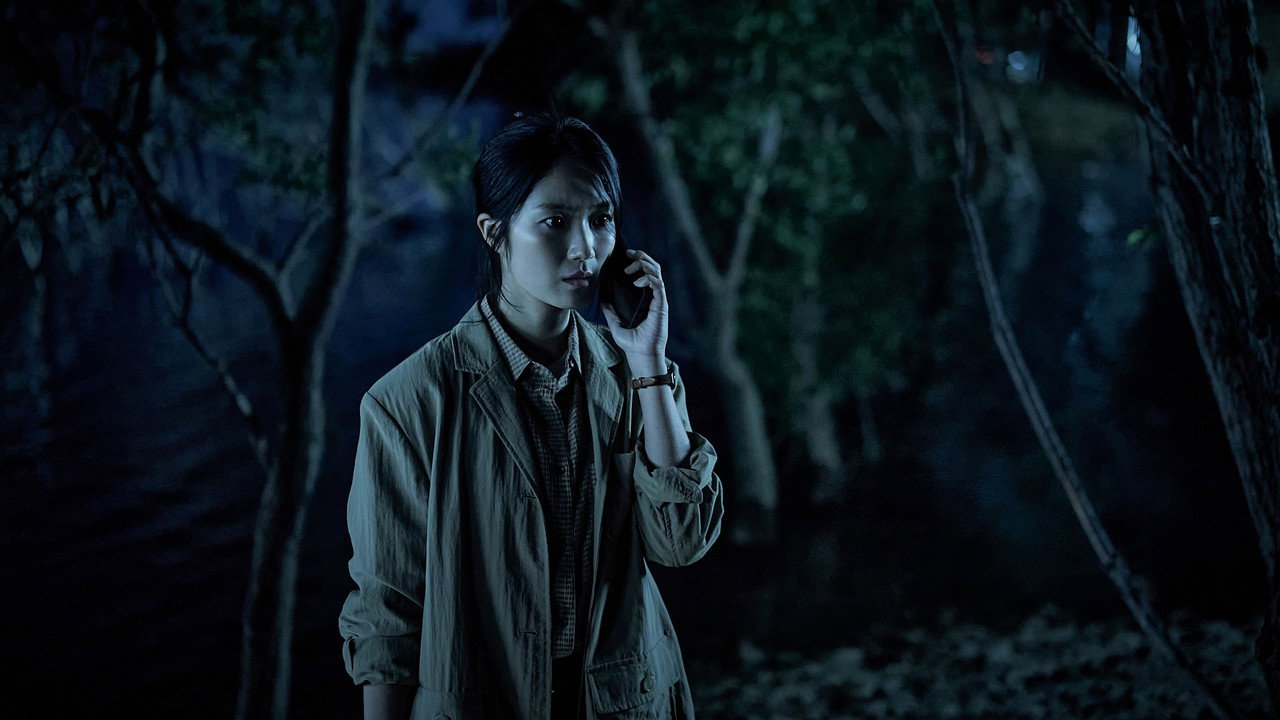
If Damyang is the film's body, Yesan is its soul.
The Lake Behind the Title
The most interesting fact about Salmokji is that the film's title and its actual filming location are two different lakes. The title comes from a real reservoir in Sadong-ri, Deoksan-myeon, Yesan County, South Chungcheong, a routine fishing spot to most, but a name attached to old ghost-sighting accounts among locals. The seed of the film's folklore grew there.
The real Salmokji entered public awareness through a television ghost-story program. Late one night, the account went, someone passing the area followed their car navigation, and it whispered them to drive into the middle of the path-less reservoir. An ordinary reservoir built for farm irrigation became a "haunted site" on the strength of that single story. Salmokji takes that exact urban legend as its starting point.
Since the release, the actual Salmokji in Yesan has drawn noticeably more visitors, an ordinary reservoir that once saw only the occasional angler is now a place crowds make the trip for. Almost none of the film's imagery is there. What is there is the origin of the legend the film borrowed. The fact visitors discover upon arrival, that the reservoir is far smaller than expected, the surroundings quiet, the daytime scenery entirely unremarkable, unsettles them in a way the film perhaps did not intend.
The Lake the Camera Chose: Damyang
About 80% of the actual filming, however, happened at Damyang Lake in South Jeolla Province. Vast open water, morning mist, forested banks. The camera didn't need the narrow shape of the real Salmokji, it needed the deepest stillness a lake could offer. Director Lee Sang-min moved approximately 320 kilometers south from one province to another to find that stillness.
Damyang Lake is an artificial lake completed in 1976 as part of the Yeongsan River basin development. Chuwolsan and Geumseongsan wrap the lake on both sides, and the shadows of those mountains stretch long across the water. At early dawn the temperature gap between water and mountain produces a heavy mist, and most of the film's water scenes were shot in exactly that hour. The lakeside deck of the Yongmaru-gil trail, running along the shore, is the very route the camera used to set its characters out over the water.
The camera didn't need the narrow shape of the real Salmokji, it needed the deepest stillness a lake could offer.
About 20 minutes by car from Damyang town, the lake is well known among hikers for the Yongmaru-gil trail, a lakeside path with wooden deck sections built directly over the water's edge. The film's night-time surface shots, the fogbound shore scenes, the dock sequences where the crew sets up equipment, all of these were made here, in this landscape.
The Shadow an Artificial Lake Carries
The decision touches on something true about horror: fear doesn't come from information. It comes from texture. The tension of a still surface that almost breaks but doesn't. The duration of fog half-hiding the view and refusing to lift. Damyang Lake delivers that texture every dawn.
That a horror film chose an artificial lake is itself meaningful. Beneath Damyang Lake lies a village that existed before the dam. The story of a submerged village is a shadow that follows lakes all over Korea. The film never says it aloud, but when the camera holds the water's surface for a long time, the viewer instinctively begins to ask: what is down there, under the water?
In the film, when PD Su-in drives toward Salmokji, she is in fact moving along two roads. The story's road points to Yesan; the camera's road points to Damyang. That misalignment quietly unsettles viewers. We are never quite told where what we are seeing actually is.
320 Kilometers Between Two Coordinates
Meanwhile, Damyang Lake carried almost all the film's visual weight and got none of the name. Two lakes split one work between them. A traveller who visits both can experience something strange. Go to Yesan for the film's name; go to Damyang for the film's image. The 320 kilometers between them are the longest jump cut the film ever made.
The Salmokji reservoir in Yesan is where the film's myth lives. Visitors come not looking for the film's scenes but for the atmosphere in which the legend was born. The quiet water, the silhouettes of anglers' rods, the imagination that runs when you consider: what if a navigation system had led me here? Damyang's lake is the body of the film; Yesan's reservoir is its soul.
Two lakes share one film between them. If Damyang is the film's body, Yesan is its soul.
Damyang Beyond the Dread
If you go to Damyang, it would be a waste to see only the lake and leave. Damyang is, by reputation, a peaceful and green destination, known for its Metasequoia-lined road, the Juknokwon bamboo grove, and the Soswaewon garden. The Yongmaru-gil trail beneath Chuwolsan is a lakeside trek of about two hours round trip, and it lets you walk closest to the very shoreline the film borrowed. The fact that this was the stage of a horror film and the fact that it is, in itself, a still and beautiful lake coexist without contradiction.
Visit in daylight. The morning mist is generous to a camera but, to a guest, mostly just cold. Under sunlight, Damyang Lake is so calm it is hard to believe it is the same place as the lake in the film. The distance between that calm and the film's dread is, in the end, the real landscape Salmokji created.
Near the lake, the Metasequoia-lined road in Damyang town center, a nationally registered cultural heritage site, is a natural stop on the way back from the water. The Juknokwon bamboo grove, a showcase of Korean bamboo culture, is within walking distance of the town. If you plan to connect a trip to Yesan's Salmokji, a one-night itinerary linking the two is more comfortable than a single-day round trip.
The Question the Film Hid
There are two lakes, and one name. The dread began at one reservoir; the film was made at the other. Only a traveller who walks the line between those two coordinates with their own feet finds, on their own, the answer to the question the film hides to the very end, where, exactly, was the water we saw?
Salmokji demonstrates how readily a legend bonds itself to a place, and how a film can weave two separate locations into a single atmosphere of dread. The dawn light the crew chose at Damyang Lake, and the legend that chose the reservoir in Yesan, which of the two is more frightening is, in the end, for the viewer to decide.
Filming Locations
담양호 전라남도 담양군 수북면 황금리
The main filming location for approximately 80% of the movie. While the film's title references the real Salmokji Reservoir in South Chungcheong Province, the vast open water and forested banks of Damyang Lake provided the horror atmosphere. Most water scenes were shot in the early morning when mist rises off the surface. About 20 minutes by car from Damyang town.
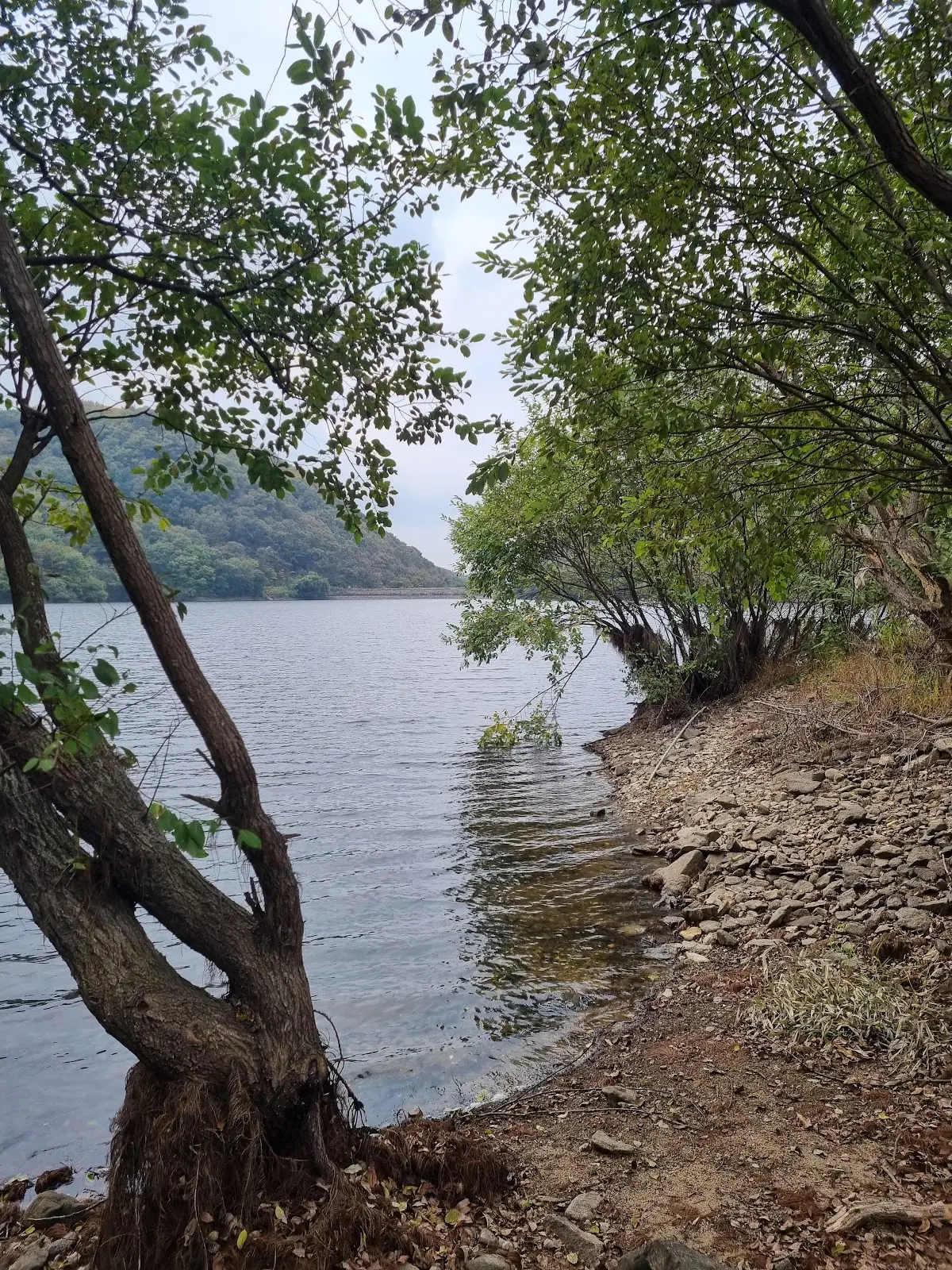
살목지 충청남도 예산군 덕산면 사동리
The real reservoir that inspired the film's title and backstory. Known locally as both a fishing spot and a site of ghost sighting reports, this is where the urban legends that seeded the film's plot originated. Filming here was minimal, but visitors who have seen the movie now make the trip to see the actual place.
Also Nearby
Juknokwon Bamboo Garden
A large bamboo garden in central Damyang, covering approximately 31 hectares of dense bamboo forest. Easy to visit on the way back from Damyang Lake into town. The coolness of the bamboo and sound of wind through the culms offer a different but equally calming stillness from the lake's surface.
Admission fee applies (adult rate). The garden has several trail loops; allow 1-1.5 hours for a full walk. About 20 minutes by car from Damyang Lake.
Damyang Metasequoia Road
A nationally registered cultural heritage road lined with tall metasequoia trees stretching approximately 8.5 kilometers. The canopy forms a green tunnel in spring and summer, turning vivid red and amber in autumn. Located 15-20 minutes by car from Damyang Lake.
Cafés and restaurants are clustered around the road. Bicycle rental is available. A natural stop on the drive back after visiting Damyang Lake.
Soswaewon Garden
A private garden laid out in the mid-Joseon period, widely regarded as one of the finest examples of traditional Korean garden design. Natural valley water, pavilions, and stone walls are preserved in their original arrangement. About 20 minutes by car from Damyang Lake.
Deoksan Hot Spring
A hot spring resort cluster in Deoksan-myeon, the same township as Salmokji Reservoir. Hotels and spa facilities fed by natural hot spring water are concentrated here, making it a practical base for a visit to the reservoir. The area is the main tourist hub in this part of Yesan County.
Accessible within about 5 minutes from Deoksan IC. Salmokji Reservoir is around 10 minutes by car from the hot spring area. Multiple accommodation options; advance online booking recommended.
Chusa Historic House and Memorial Hall
The ancestral home and memorial hall of Chusa Kim Jeong-hui, the celebrated late-Joseon calligrapher and epigraphist. Located in Sinam-myeon, Yesan County, about 20 minutes by car from Salmokji. A natural companion stop for travellers visiting Yesan for the reservoir.
Allow about 1 hour to tour the memorial hall, historic house, and outdoor garden. Free or nominal admission.
Plan Your Visit
Damyang Lake (main filming location): Hwanggeumri, Subuk-myeon, Damyang County, South Jeolla. About 20 minutes by car from Damyang town. By bus, take a local Subuk-bound bus from Damyang Intercity Bus Terminal. The Yongmaru-gil lakeside deck is free to enter. Best seasons: autumn (Oct-Nov) for mist and foliage, summer (Jul-Aug) for full water levels. Round-trip hiking time approx. 2 hours.
Salmokji Reservoir (original legend site): Sadong-ri, Deoksan-myeon, Yesan County, South Chungcheong. About 15 min by car from Deoksan IC on the Dangjin-Yeongdeok Expressway. Public transit is limited; a taxi from Yesan Intercity Bus Terminal is recommended. Respect fishing-zone boundaries. Free to visit.
Combined itinerary: Damyang to Yesan is roughly 2.5-3 hours by car. A two-day trip with one night in Damyang before driving north to Yesan is recommended.