Five Centuries Between Joseon and Seoul
How Wonderful New World layers two eras onto the same view

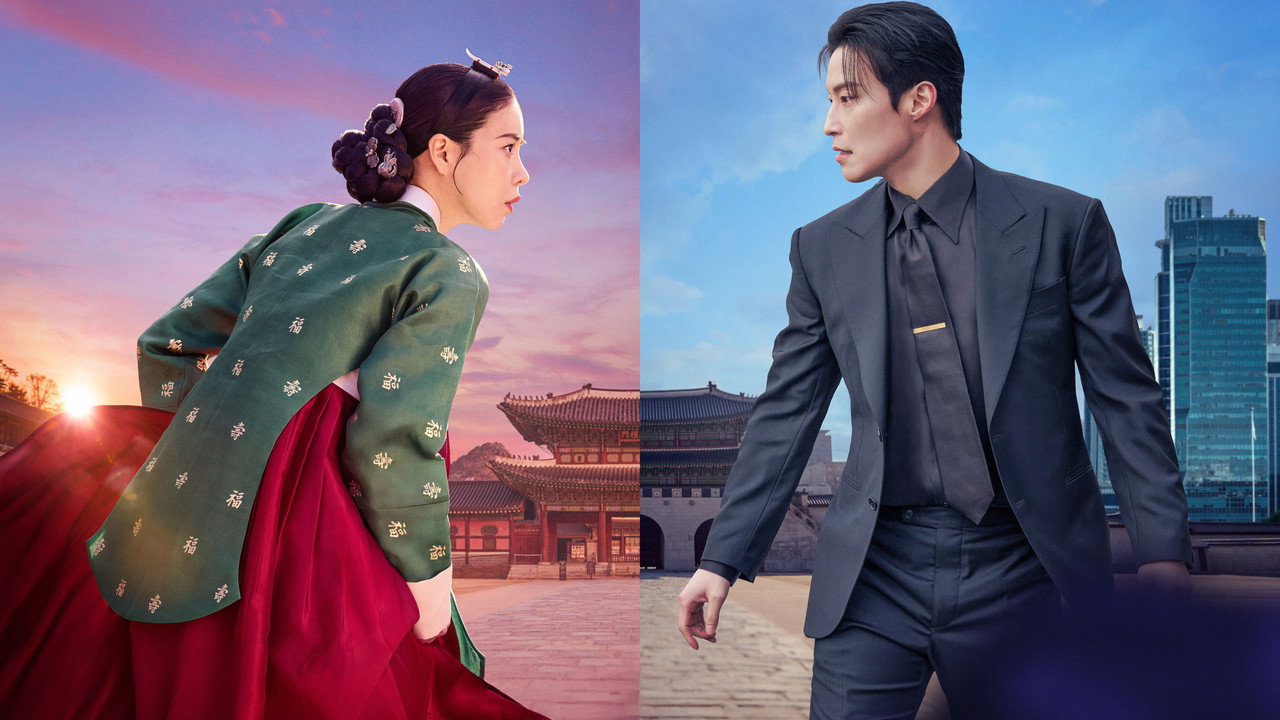
The camera can look in any direction without the period cracking. That space is the entire world Kang Dan-shim is about to lose.
The real protagonist of Wonderful New World is the seam between two eras. Kang Dan-shim, a villain of Joseon, wakes up in the body of Shin Seo-ri, a 21st-century Seoul woman. What lies between them is 500 years of time, and what makes that time bearable for a viewer is four landscapes. The show stitches together four coordinates, Yongin, Mungyeong, Seoul, Jeju, into a single emotional map.
The Urban Joseon: Daejanggeum Park, Yongin
The journey begins at Daejanggeum Park in Yongin, Gyeonggi-do. On a site of some 840,000 pyeong stand more than 240 structures recreating the Silla, late Goryeo, and Joseon periods, the largest period-drama open set in Korea. Countless period dramas, including Queen Seondeok, Jumong, and Yi San, were made here, and the first episode of Wonderful New World, Kang Dan-shim's final walk through Joseon before her execution, rests on this set as well. With palace grounds, market streets, and tiled alleys recreated together, the set's strength is that the camera can look in any direction without the period cracking.
The Daejanggeum Park set holds not a single city but several social classes of Joseon at once. The palace eaves where the king resides, the wide courtyard of a noble household, the market street where commoners jostle. The alleys Kang Dan-shim passes through as she is dragged to the execution ground are, in effect, a map of the Joseon class system. The show entrusted the weight of its first episode to this place in order to show, all at once, the entire world Kang Dan-shim is about to lose.
The camera can look in any direction without the period cracking. That space is the entire world Kang Dan-shim is about to lose.
Look closely at episode one and you will notice the camera tends to flow along the alleys between buildings rather than linger on any single structure. This is a deliberate choice. The set's spatial continuity, from palace wall to the middle of the market street without any break, adds weight to Kang Dan-shim's final steps. Everywhere she looks, there is Joseon; and everywhere she looks, it is filled with things she will never see again.
The Mountain Joseon: Mungyeongsaejae Open Set
Next is the Mungyeongsaejae open set in North Gyeongsang Province. Period military barracks and government office sets folded into mountain terrain, this is where the show stages the final confrontation just before the execution. Originally launched in 2000 as a KBS period-drama set and later remodeled to a Joseon-era setting, it consists of some 130 structures including a Gwanghwamun gate and the Gyotaejeon hall. If Yongin's set makes an urban Joseon, Mungyeong's set makes a mountainous one. Same dynasty, different grain.
Mungyeongsaejae was a road before it was ever a set. The most important mountain pass linking Yeongnam and Hanyang in the Joseon era ran through here, and the steep terrain that scholars crossed on their way to sit the state examinations still remains today. It is no accident that the drama placed its pre-execution confrontation in these mountains. If the urban Joseon is the landscape of what Kang Dan-shim possesses, the mountainous Joseon is the landscape of the fate she finally faces.
Beyond the open set, the surrounding Mungyeongsaejae Provincial Park preserves the atmosphere of the old road itself. Walk the roughly six kilometres from Gate One to Gate Three and you feel in your body where the tension of the drama's military set comes from. The footsteps of scholars who once walked this path dreaming of passing their exams share the same soil with Kang Dan-shim's final stand against fate.
The Layered Present: Ilmin Museum of Art
The modern present begins at the Ilmin Museum of Art at 13 Sejong-ro, Jongno-gu, Seoul, within sight of both Gwanghwamun Square and Gyeongbokgung. The show's reason for placing Shin Seo-ri's daily life here is obvious: it's a spot where the memory of Joseon and the present share a single line of sight. Two eras stack inside one frame.
The Ilmin Museum building is itself a stratum of time. Converted from a former newspaper headquarters built in the 1920s, this building testifies, in the middle of Gwanghwamun, to both the modern and the contemporary at once. Beyond the museum windows you see the tiles of Gyeongbokgung, and beyond those the skyscrapers of 21st-century Seoul. The landscape Shin Seo-ri passes every day is the most compressed coordinate of the show's theme, that two eras live in the same space.
Beyond the museum windows lie the tiles of Gyeongbokgung, and beyond those the skyscrapers of 21st-century Seoul. The landscape Shin Seo-ri passes every day holds the show's entire theme.
The address of Gwanghwamun is itself already a layering. The royal palace of Joseon stood here, was damaged through the colonial period, was partially restored, and now borders a modern public square. The Ilmin Museum adds yet another layer, the 1920s, to that accumulation. The scene where Kang Dan-shim's gaze looks out through Shin Seo-ri's eyes in this square was filmed here not as a convenient backdrop, but as a direct invocation of the place's own memory into the drama's narrative.
Between Eras: Bimil Forest, Jeju
The final coordinate is Bimil (Secret) Forest, near Andeok-myeon in Seogwipo, Jeju. Dense cedars wrapped in fog create a space that doesn't fit either of the show's eras. Inside the drama, this forest becomes the place that is neither dream nor reality, the slip-zone where one era slides into the other's memory.
Bimil Forest is, in origin, an artificial cedar grove planted as a windbreak. The straight trees stand at even intervals, slicing the light into fine pieces, and Jeju's characteristically humid air lingers among them as fog. The reason the show needed this unreal space, neither palace nor city, is clear: a scene where two eras collide requires a stage that belongs to no era at all.
Most of Jeju's cedar forests were planted in the 1960s and 70s. While fulfilling their original purpose of blocking wind and sound, the uniform spacing and height of the trees produces a visual repetition that strips visitors of their sense of direction. That disorientation, the loss of bearing inside a perfectly ordered space, is precisely the quality of confusion the audience needs to feel when Kang Dan-shim and Shin Seo-ri fall into each other's memories.
Four Coordinates, One Feeling
Yongin, Mungyeong, Seoul, Jeju. It's rare for a single show to bridge four coordinates this far apart. But the show doesn't show off the distance. It erases it. As the camera cuts between them, what stays with the viewer is the sensation that both eras occupy the same space.
Each of the four places embodies the theme of 'layering' in its own way. Daejanggeum Park is a space that physically reconstructs a vanished era; Mungyeongsaejae is the land's own memory of a time that has otherwise disappeared; Ilmin Museum is a building where several pasts have accumulated inside the present; and Bimil Forest is a space outside of time, belonging to no era. Each, in a different way, proves that 'here and now' is not a single layer.
For a traveller, the natural pairing is the two open sets together, with Ilmin and Bimil as their own days. Yongin and Mungyeong are about a two-hour drive apart, so you can pass through two Joseons, the urban and the mountainous, in a single day. The Ilmin Museum at Gwanghwamun slots naturally into a Seoul itinerary, and Bimil Forest in Jeju is best paired with the other forests and oreum volcanic cones around Andeok-myeon.
Stand in front of Ilmin Museum at Gwanghwamun and you can see the tiles of Gyeongbokgung and the glass of the museum's facade in the same eye. For a moment, the show's point of view becomes yours. If Wonderful New World layered five centuries onto a single screen, the traveller unfolds that layering again with their own two feet. The distance between Joseon and Seoul is, for someone walking, in the end only a single day's route.
Filming Locations
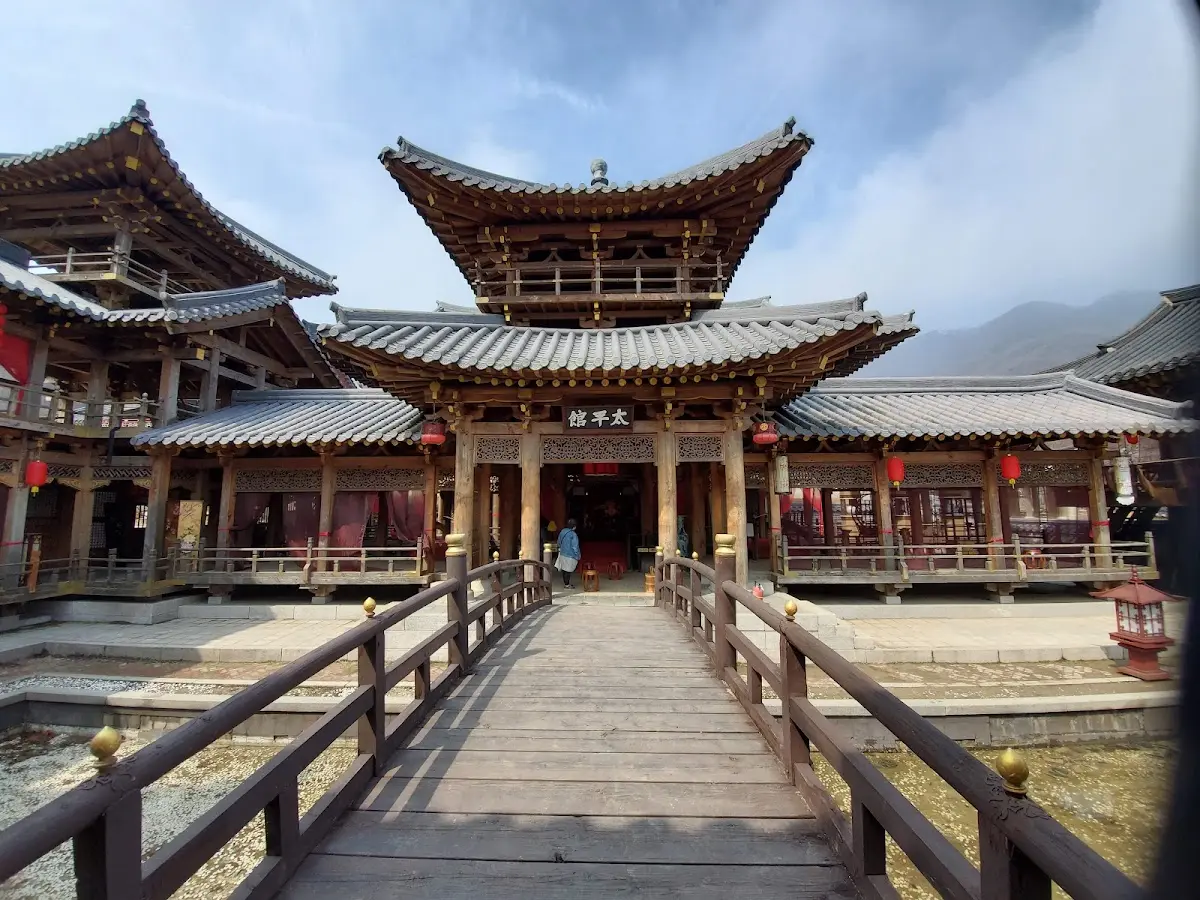
용인 대장금파크 경기도 용인시 기흥구 상갈동 148
The Joseon-era open set at Daejanggeum Park in Yongin, Gyeonggi-do. Reproduced palace grounds, market streets, and tile-roofed alleyways serve as the backdrop for Kang Dan-shim's final moments in the Joseon dynasty. One of the largest period drama sets in Korea.
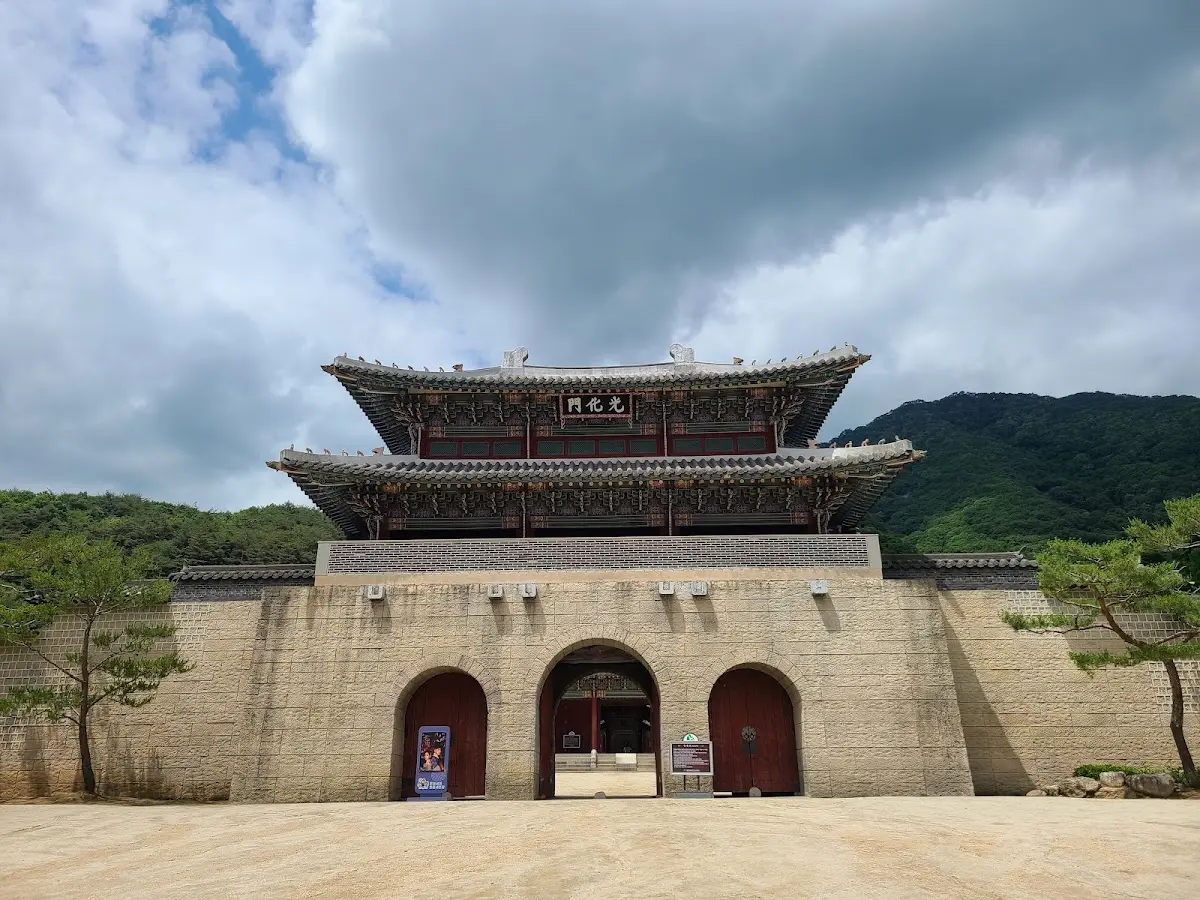
문경새재 오픈세트장 경북 문경시 문경읍 새재로 932
The Mungyeongsaejae open set in North Gyeongsang Province, combining mountainous terrain with period military barracks and government office sets. Used for the confrontation scene immediately before Kang Dan-shim's execution. The mountain backdrop amplifies the period drama's weight.
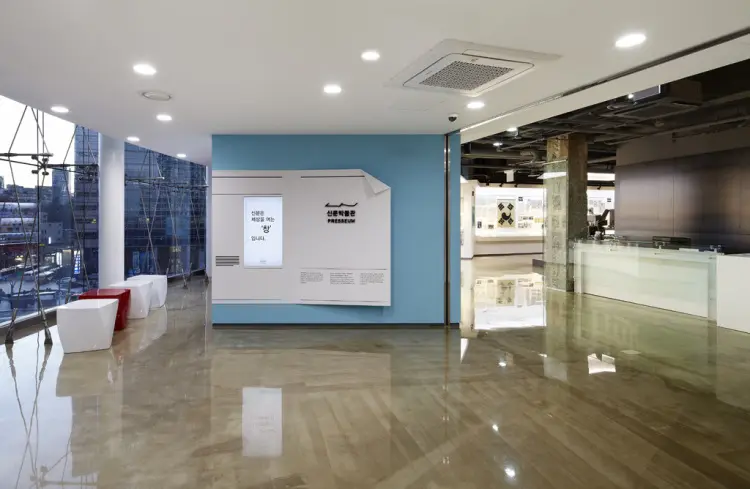
일민미술관 서울 종로구 세종로 13
Ilmin Museum of Art at 13 Sejong-ro, Jongno-gu, Seoul, near Gwanghwamun Square. It appears as part of present-day Shin Seo-ri's daily environment. The museum's location (within sight of Gwanghwamun and Gyeongbokgung) makes it a symbolically loaded space where Joseon-era memory and the modern present occupy the same geography.
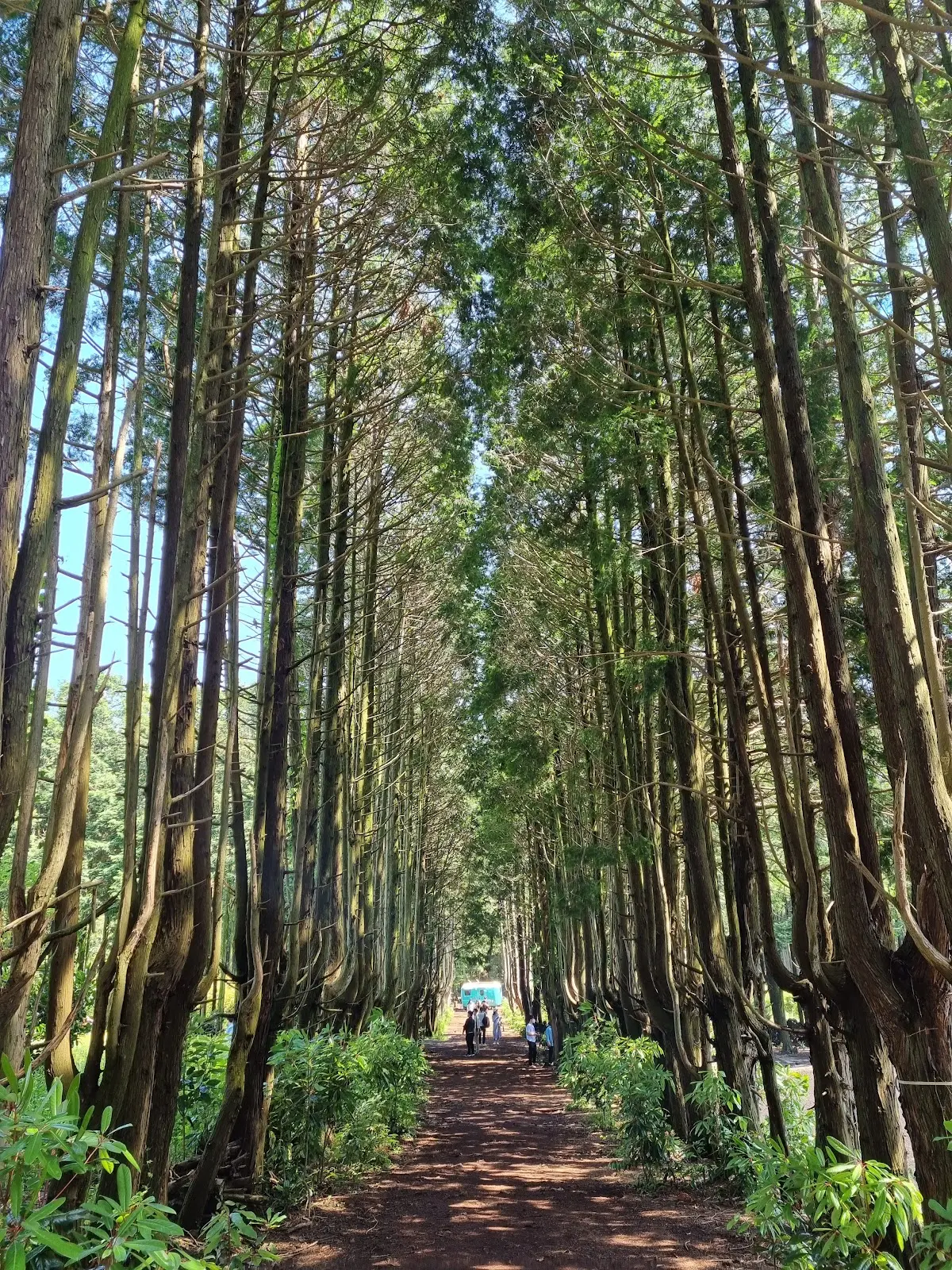
제주 비밀의숲 제주특별자치도 서귀포시 안덕면
Bimil Forest (Secret Forest) near Andeok-myeon, Seogwipo, Jeju Island. Dense cedar groves wrapped in mist provide the backdrop for scenes where Kang Dan-shim's past memories and Shin Seo-ri's present collide at the border of dream and reality. Jeju's otherworldly landscape amplifies the drama's temporal ambiguity.
Also Nearby
Korean Folk Village
About a 10-minute drive from Daejanggeum Park. An open-air folk museum with more than 270 full-scale reconstructed traditional buildings (commoner homes, yangban estates, and government offices) from the Joseon era. Traditional craft demonstrations, farmer's music, and folk games run throughout the day. Delivers a sense of 'living Joseon' distinct from the drama's open set.
Weekends and peak seasons get crowded. A weekday morning visit is recommended. Efficient to combine with Daejanggeum Park on the same day.
Mungyeongsaejae Provincial Park
The provincial park immediately adjacent to the open set. The old road of Mungyeongsaejae (the main mountain pass of the Joseon-era Yeongnam Great Road) is preserved for about 6.5 km from Gate One (Juheul Gate) to Gate Three (Joryeong Gate). The original stone path once walked by scholars heading to the state examinations in Hanyang remains intact, the closest place to feel the drama's historical setting on foot.
Round trip about 3-4 hours. Comfortable hiking shoes essential. Spring cherry blossoms and autumn foliage seasons are especially beautiful. A shorter option after visiting the open set is to walk as far as Gate One and return.
Gyeongbokgung Palace
A 5-minute walk from Ilmin Museum of Art. Built in 1395 as the main royal palace of the Joseon dynasty. Walking into the very palace that is visible through Ilmin's windows is the reverse experience of how the drama layers the two eras. You step from the modern street into Joseon. Key halls including Geunjeongjeon and Gyeonghoeru are well preserved.
Closed on Tuesdays. The changing of the royal guard ceremony runs several times daily. Check the schedule in advance. Free admission when wearing hanbok.
Sanbangsan Mountain
About a 15-minute drive from Andeok-myeon where Bimil Forest is located. A volcanic lava dome rising to 395 metres. Its distinctive tower-like profile is an iconic landmark of southwest Jeju. From the mid-mountain Sanbang Cave Temple, Jeju's southern sea and the Hyeongjedo Islands are visible at once. Its open, panoramic view makes a good counterpoint to the enclosed verticality of Bimil Forest in a single day's itinerary.
About 20-30 minutes climbing stairs to Sanbang Cave Temple. Water droplets dripping from the cave wall can be seen inside. Visit near sunset to see the silhouette of the Hyeongjedo Islands turn golden.
Anduk Valley
Within about a 10-minute drive of Bimil Forest. A hidden gorge formed by subtropical evergreen forest and dramatic rocky cliffs, designated a Natural Monument. Even in summer it is cool and humid. Where Bimil Forest offers the uniform vertical rhythm of an artificial cedar plantation, Anduk Valley gives the contrasting experience of an organic space shaped by natural rock and vegetation.
Only the designated trail is open inside the valley. Water levels are highest and most scenic just after the rainy season (June-August). Hiking shoes recommended.
Plan Your Visit
Daejanggeum Park (Yongin): Sanggal-dong, Giheung-gu, Yongin, Gyeonggi-do. Near Everland. Public transport: Sinbundang Line to Giheung Station, then bus. Admission fee applies (check current rates). Allow about 2 hours to explore the set. Pre-check opening hours.
Mungyeongsaejae Open Set (Mungyeong): 932 Saejae-ro, Mungyeong-eup, Mungyeong, North Gyeongsang. Car recommended (approx. 2.5 hours from Seoul). Pair with the old road trail in Mungyeongsaejae Provincial Park (Gate 1 to Gate 3, about 6 km) for a half-day itinerary. Spring and autumn are ideal seasons.
Ilmin Museum of Art (Seoul): 13 Sejong-ro, Jongno-gu, Seoul. 5-min walk from Gwanghwamun Station (Line 5). Admission varies by exhibition. Naturally combines with Gyeongbokgung and the Gwanghwamun area on foot.
Bimil Forest (Jeju): Andeok-myeon, Seogwipo. Rental car essential. Combine with Anduk Valley and Sanbangsan for an efficient half-day loop. Visit early morning for the densest fog. Open year-round; summer is humid.