Where the Hometown Lights Come Back On
Four stops along Jeju's eastern coast where Welcome to Samdal-ri finds its way home

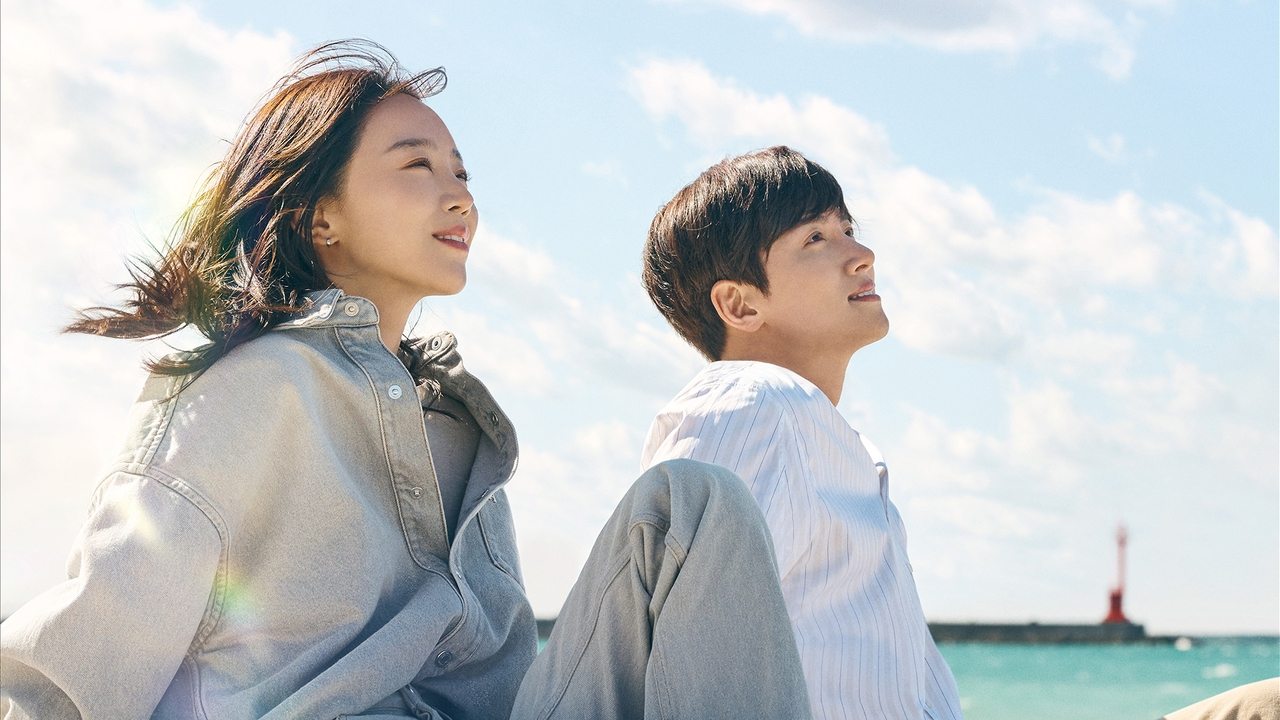
Samdal-ri is on no map, yet the sea and the oreum that make up the village are all there, along Jeju's eastern coast.
A low hill where the planes pass, Dodubong
Once you have landed at Jeju Airport and collected your bags, most trips rush off somewhere. Welcome to Samdal-ri catches that hurry for a moment and sets it down on a low hill ten minutes from the airport by car. This is Dodubong. It is where a young Sam-dal and Yong-pil once sat side by side, counting the planes passing overhead, and where the dream of leaving for Seoul first began to swell.
The summit is a fifteen-minute walk away. Climb the dirt path and Jeju City opens on one side, the wide-open sea on the other. It is clear why the drama places this scene at its very beginning. Leaving and returning are folded together beneath the same sky, and the landscape says so before any line of dialogue does.
Leaving and coming home fold together beneath one sky. Dodubong is where those two feelings first meet.
A red lighthouse and a windswept shore, Gimnyeong
Follow the coastal road east from Dodubong and you reach Gimnyeong in Gujwa-eup, the beach that lends the most to the mood of Samdal-ri village. The water at Seongsegi Beach shifts from emerald in the shallows to deep teal further out, and above it a red lighthouse stands in a row with white wind turbines.
Many of the drama's scenes pass across the colors of this shore. Each time the characters argue, make peace, and turn back to face the sea, the waves of Gimnyeong move behind them. Windy days are common here, so the sound of the surf and the turning turbines carry together, as natural as a village's background hum.
Summer fills the beach with swimmers, but in spring and autumn Gimnyeong is quiet. Walk the breakwater out toward the lighthouse and you understand why the camera lingered here so long.
The shade of a tree that has kept watch, the Pyeongdae-ri hackberry
Fifteen more minutes from Gimnyeong brings you to Pyeongdae-ri, where an old hackberry tree spreads a broad shade over the heart of the village. Trees older than any person are common in Jeju's villages, and beneath them people have long gathered to rest and to talk.
The warmth of community that Welcome to Samdal-ri portrays comes from shade like this. The story of a village taking Sam-dal back in after she loses everything in Seoul: if that embrace had a specific place, it would surely be under a hackberry like this one. The tree still stands where it always has, keeping watch over the village.
Nearby lies Bijarim, a flat forest of thousands of torreya trees more than five hundred years old. Walk its red earthen path slowly and you feel, in your own body, how a tree endures time. It is a route where a feeling that began with a single hackberry widens out to a whole forest.
A harbor where the store lights came on, Ojo-ri
At Jeju's eastern edge, close to Seongsan, lies Ojo Harbor, a small and quiet port along Jeju Olle Trail Course 2. The production remade an old warehouse here into the village store of the drama. In the evenings this was the warm, lit spot where Sam-dal and her friends gathered to sit.
The harbor water is calm. Seongsan Ilchulbong is not far off, and at the hours when its silhouette shimmers on the water your pace slows on its own. This quiet, a step back from the noise of the tourist trail, is surely the tempo the drama wanted to give to Samdal-ri.
To make room beside you without any fuss. The quiet of Ojo Harbor is the temperature of a village called Samdal-ri.
Samdal-ri as a map of the heart
Samdal-ri is on no map. Instead the sky of Dodubong, the water of Gimnyeong, the tree shade of Pyeongdae-ri, and the harbor of Ojo-ri gather to form a single village. Stitching together real places along Jeju's eastern coast, the drama built a hometown that exists nowhere yet anyone might long for.
So this trip is at once a visit to filming locations and a walk along a map of the heart. The sea you saw on screen lies before your eyes, and the wind passes over the spots where the characters sat. You meet again, on foot, the story of someone who left and came home.
A route for the traveler
Begin in the west at Dodubong. It is close to the airport, and the summit holds a generous first impression of Jeju. Next, follow the coastal road to Gimnyeong. Pass the lighthouse and the sea, catch your breath at the Pyeongdae-ri hackberry and Bijarim, and finally reach Ojo Harbor and Seongsan at Jeju's eastern tip, and a day's route completes itself naturally.
With a rental car you can cover it in a day, but if you want to linger at each place, two days is better. Spring and autumn are the finest walking seasons. Taking your time is how you enjoy this drama and this coast together.
สถานที่ถ่ายทำ
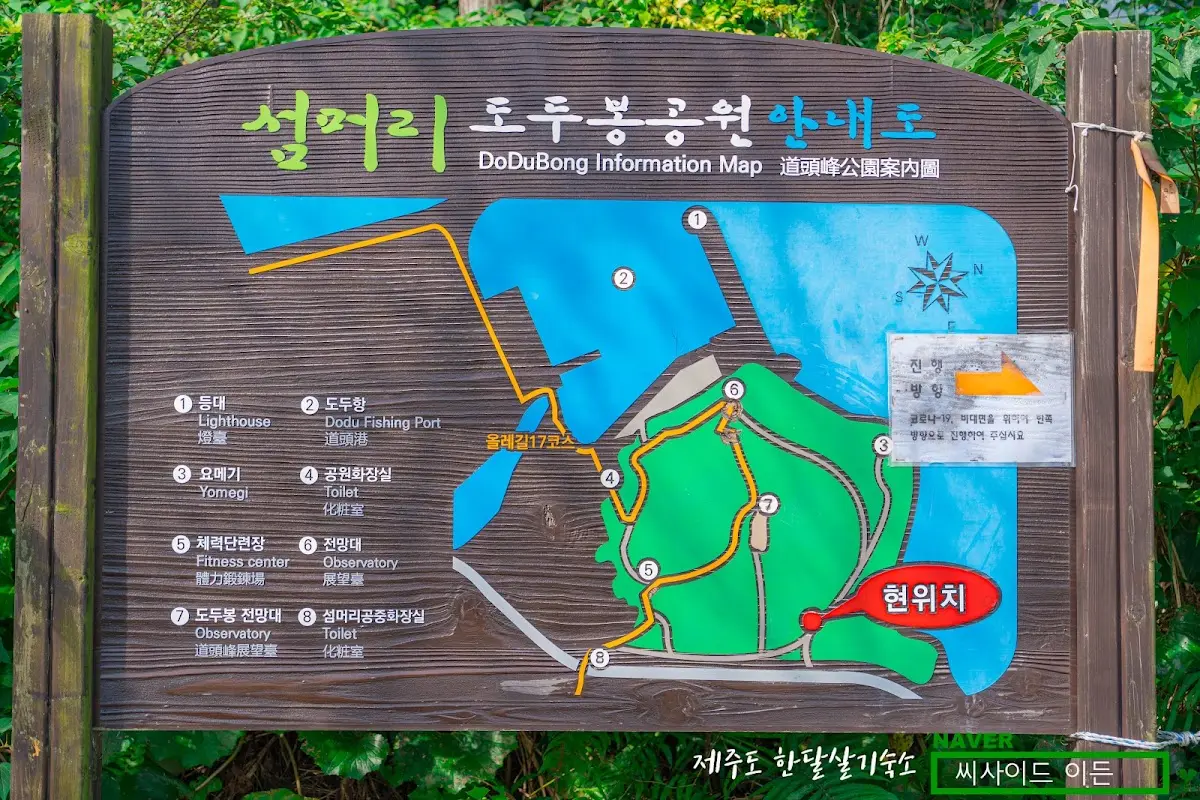
도두봉 제주시 도두일동
The spot where a young Sam-dal sat beside Yong-pil, watching planes cross the sky and dreaming of leaving for Seoul. A gentle oreum near Jeju Airport, its summit opens onto a sweeping view of the Jeju sea.
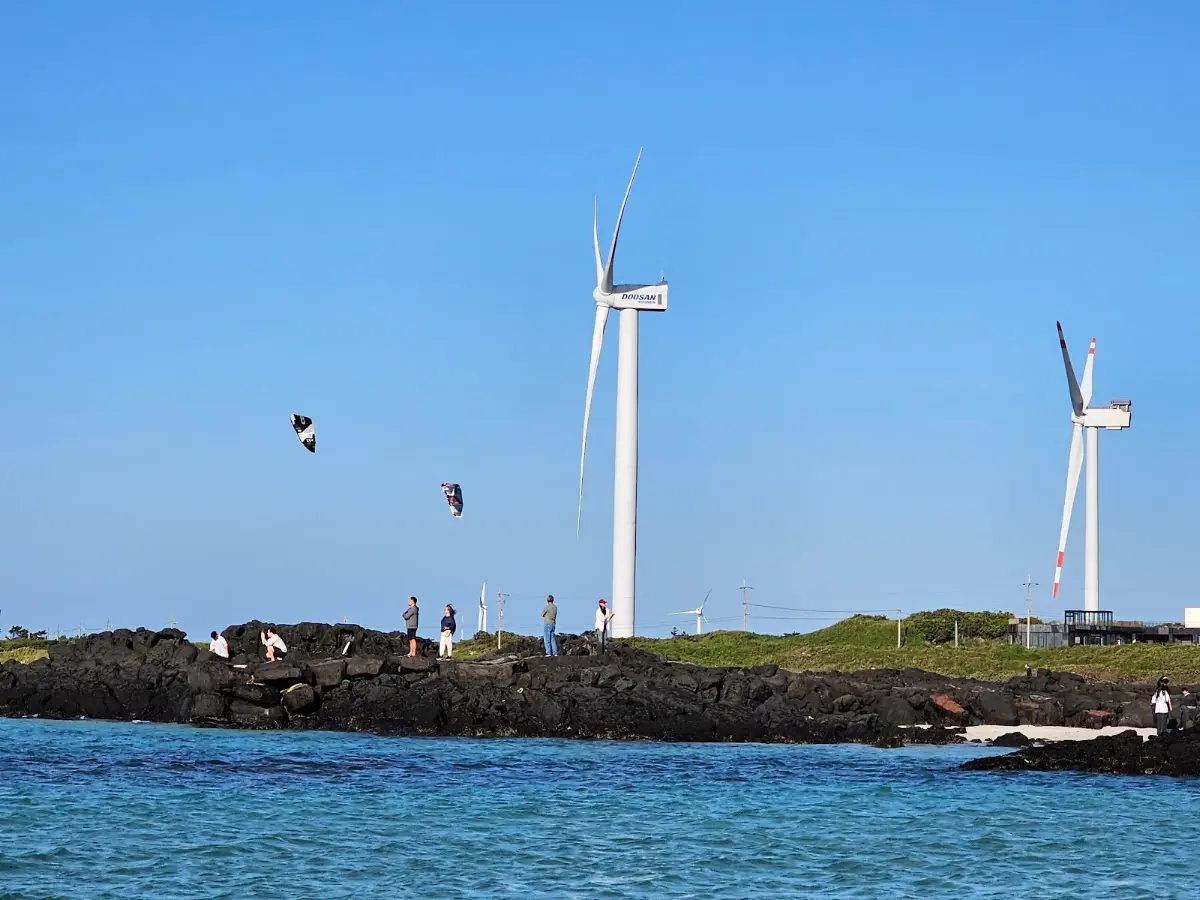
김녕해변 제주시 구좌읍 김녕리
An emerald-water beach where a red lighthouse meets rows of wind turbines. This coastal scenery captures the mood of the drama's Samdal-ri village and appears as the backdrop for several scenes.
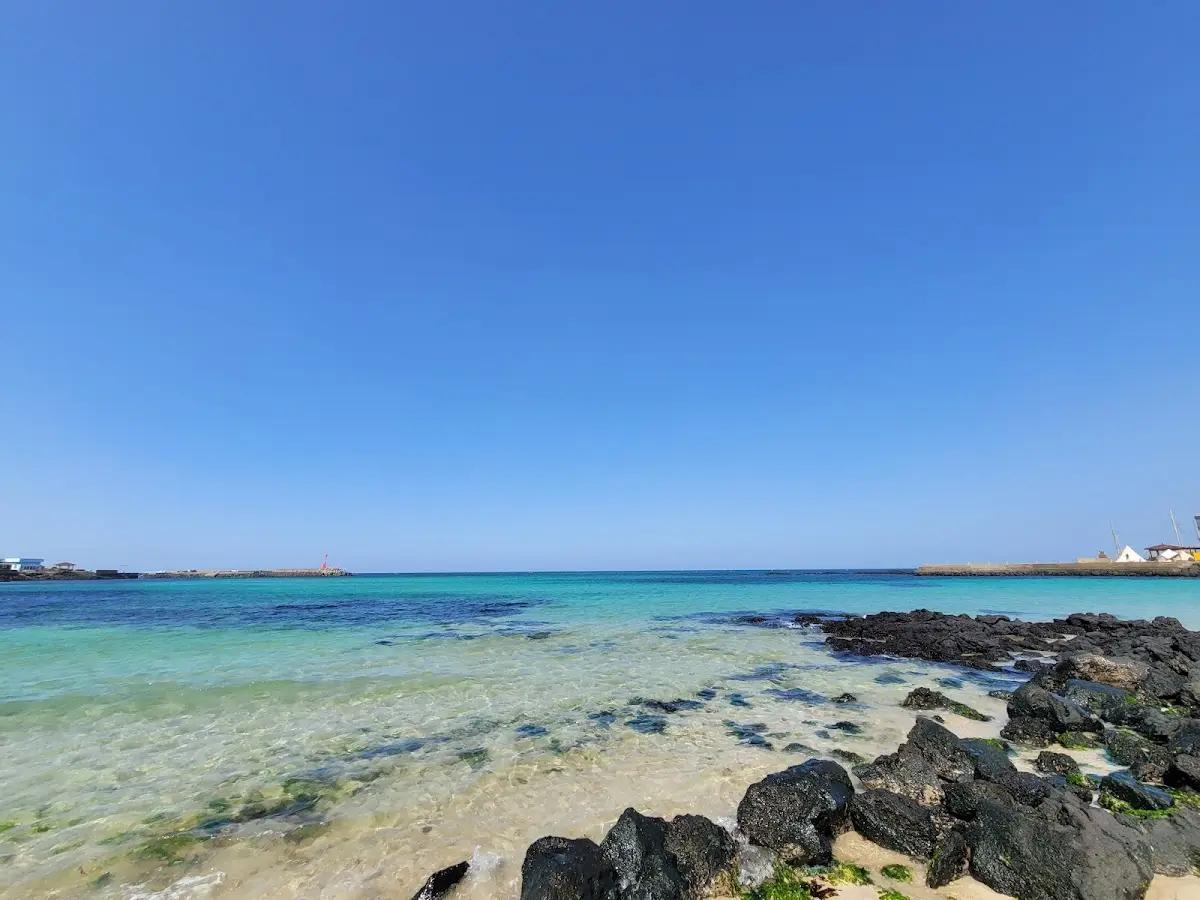
평대리 팽나무 제주시 구좌읍 평대리
The old hackberry tree of Pyeongdae-ri, where villagers gather to rest. It appears in the drama as a symbol of the warm communal spirit of a Jeju village.
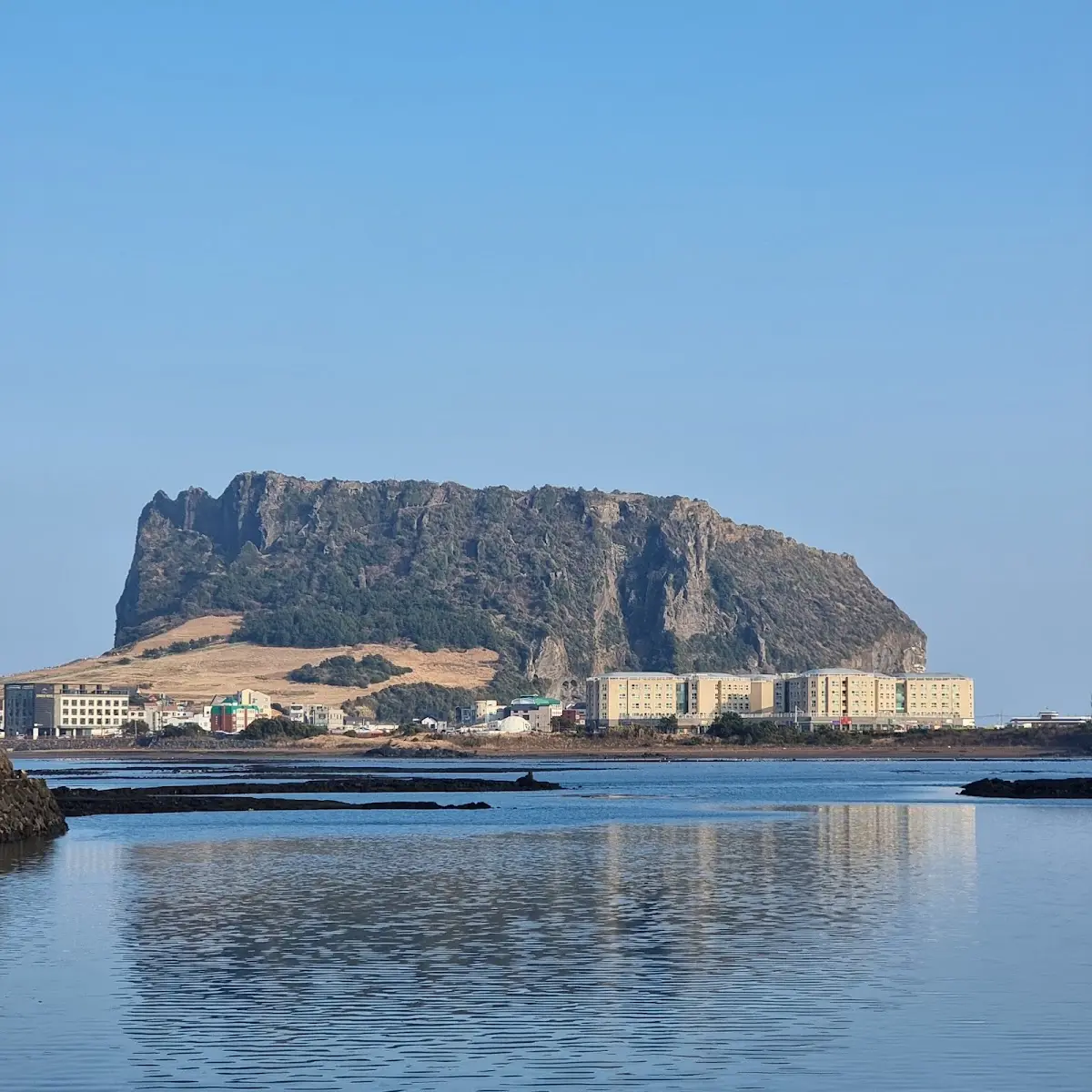
오조포구 서귀포시 성산읍 오조리
The site of the convenience store set where Sam-dal and her friends often gather. A warehouse along Jeju Olle Trail Course 2 was remodeled for filming, set against the quiet scenery of the harbor.
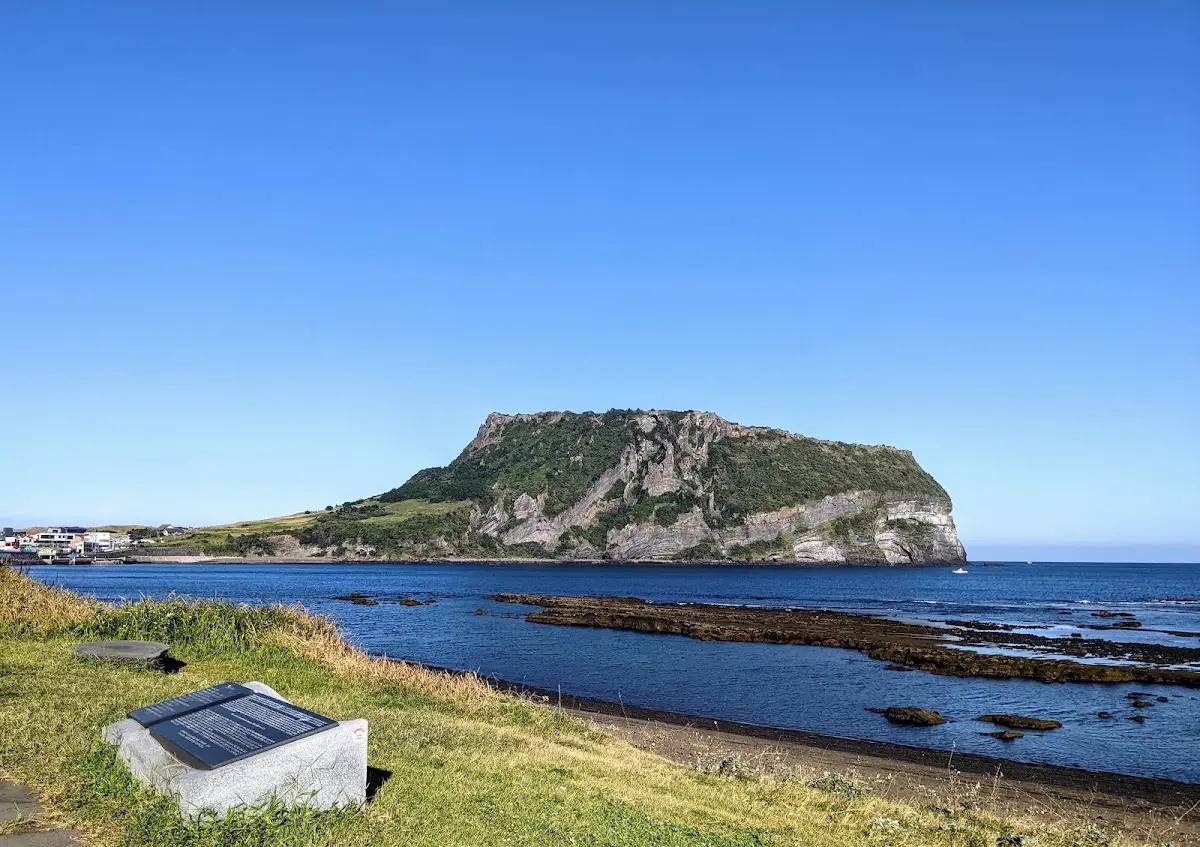
광치기해변 제주특별자치도 서귀포시 성산읍 고성리 224-33
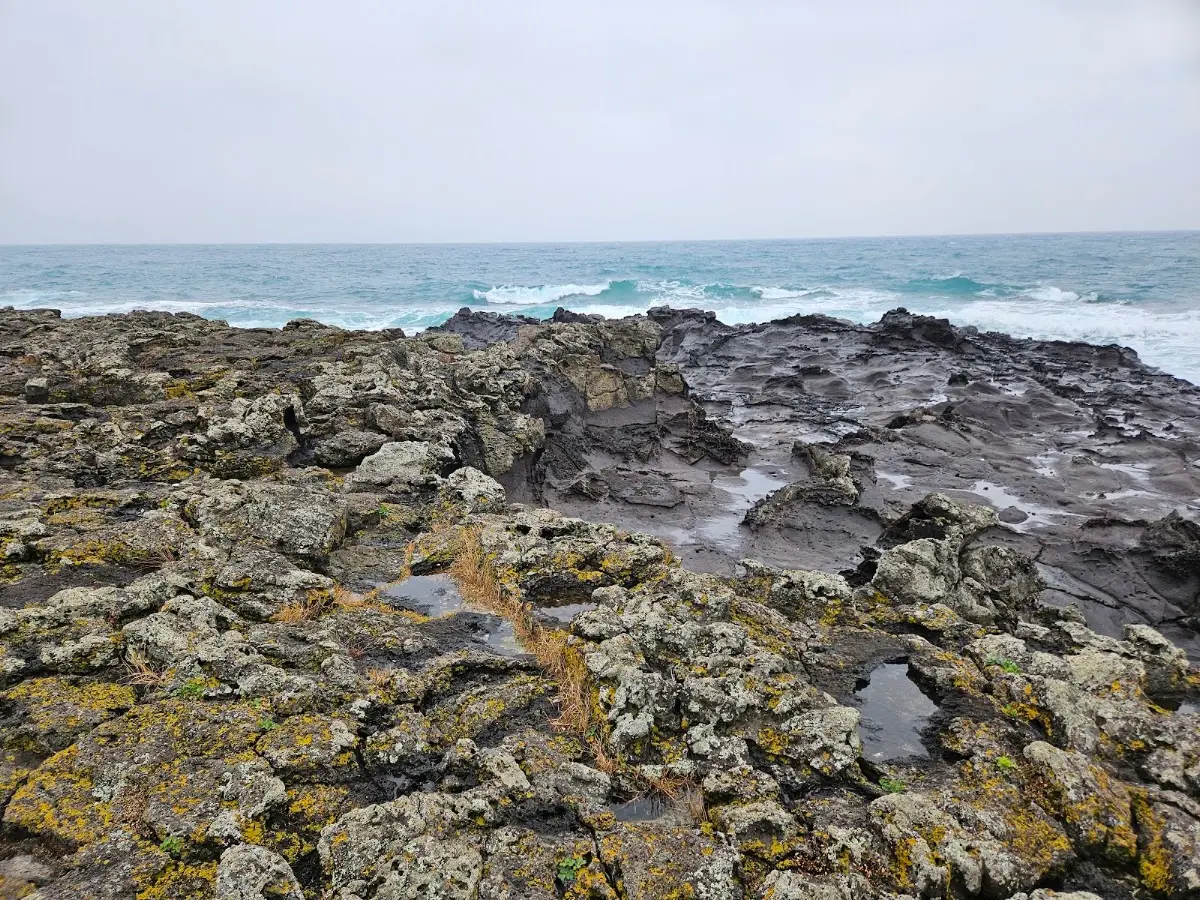
In episode 8 this is the coastal road Sam-dal and Yong-pil pass on their way to the Jeju weather service photo exhibition. At low tide the mossy lava bedrock emerges in front of Seongsan Ilchulbong Peak and the shore turns green. It is where Jeju Olle Trail Course 1 ends and Course 2 begins, so check the tide table first if you want to walk out onto the rock shelf and frame the peak behind it.
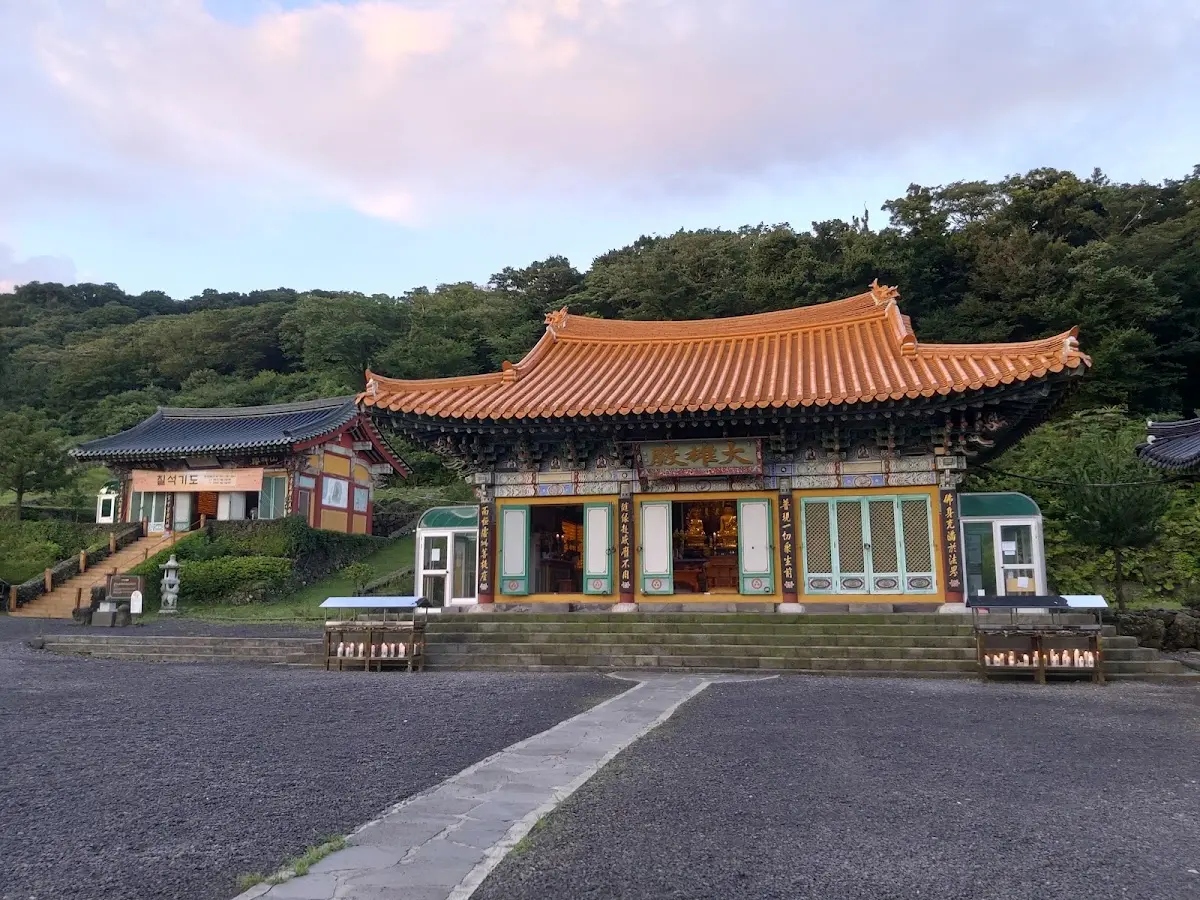
관음사 제주특별자치도 제주시 산록북로 660
In episode 14 Sam-dal comes to this temple to find Yong-pil's father Sang-tae, tells him she will love Yong-pil for the rest of her life, and he finally accepts the two of them. The temple sits on the northern slope of Hallasan, and the trailhead of the Gwaneumsa hiking route begins just past its grounds. Autumn deepens the foliage along the approach road, making it easy to pair the temple with a short walk in the forest.
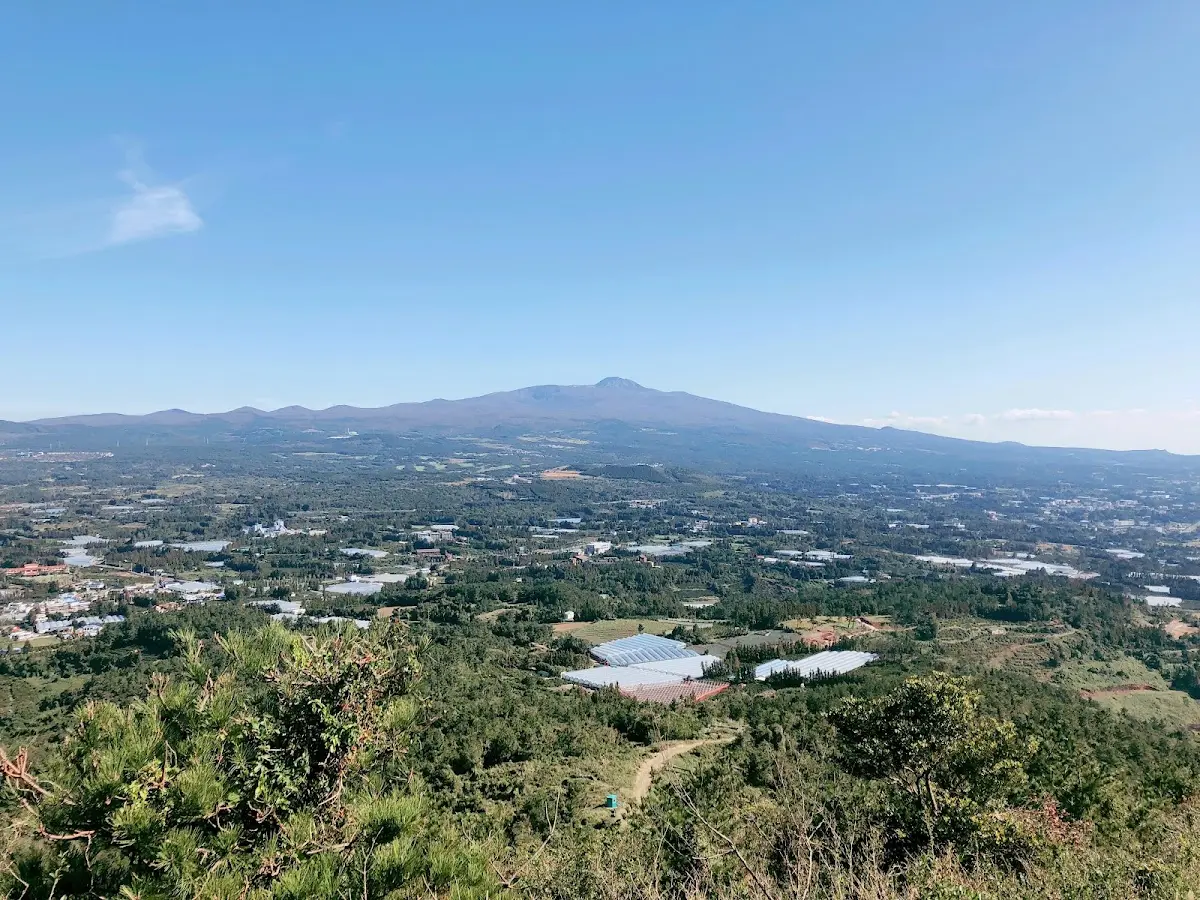
군산오름 제주특별자치도 서귀포시 안덕면 창천리 564
Episode 7 filmed the Olle trail scene here, where Cho Sam-dal sets out to find herself. The climb from the mid-mountain road takes twenty to thirty minutes, and the summit opens onto Hallasan, Sanbangsan and Marado in the distance. It is a known sunrise spot, so bring a light if you plan to walk up before dawn.
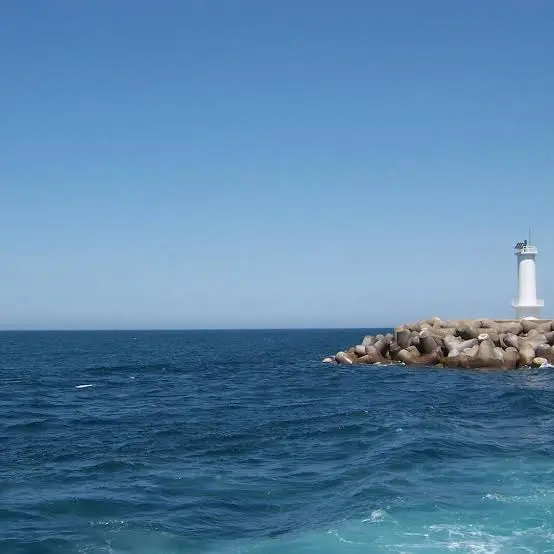
가파도 제주특별자치도 서귀포시 대정읍 가파리
Episode 5 shot the scene where Yong-pil ties Sam-dal's shoelaces even as tears run down his face. The island also stands in for the characters' school days in flashback, and in spring the whole island turns into a field of green barley. Access is by ferry from Moseulpo Port or Unjin Port, so check sailing times and possible cancellations before setting out.
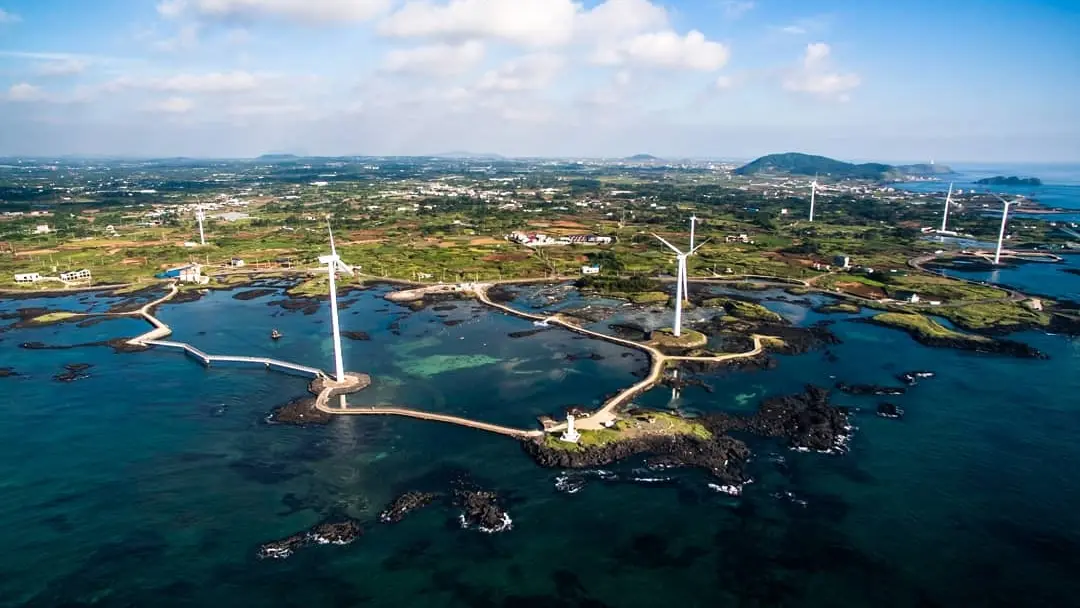
신창풍차해안도로 제주특별자치도 제주시 한경면 신창리 1481-23
In episode 13 Sam-dal comes here on assignment as a photographer for the Jeju weather service and confirms that Yong-pil's love has not changed in eight years. Wind turbines line the shore with emerald water running beneath them, making this one of the island's best known drives. A walking path follows the coast, so it is easy to stop the car and put the turbines and the horizon in a single frame.
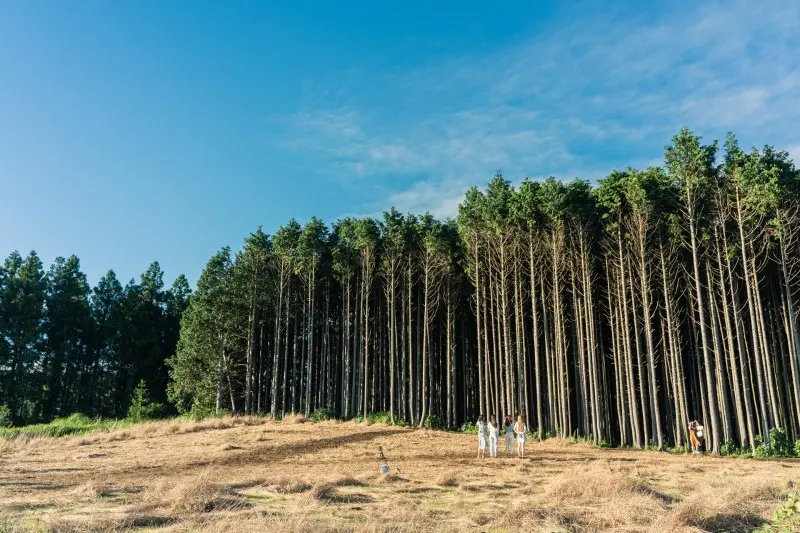
안돌오름 비밀의숲 제주특별자치도 제주시 구좌읍 송당리 2173
In episode 10 a couple asks Sam-dal to take their photograph in this forest, and she finishes the shoot satisfied with her day. It is a stand of cypress beside Andol Oreum, with palm trees, stone walls and a small hut scattered through it as photo spots, which is why it draws self wedding and snap shoots. Check the opening hours before you go, and wear shoes you do not mind muddying after rain.
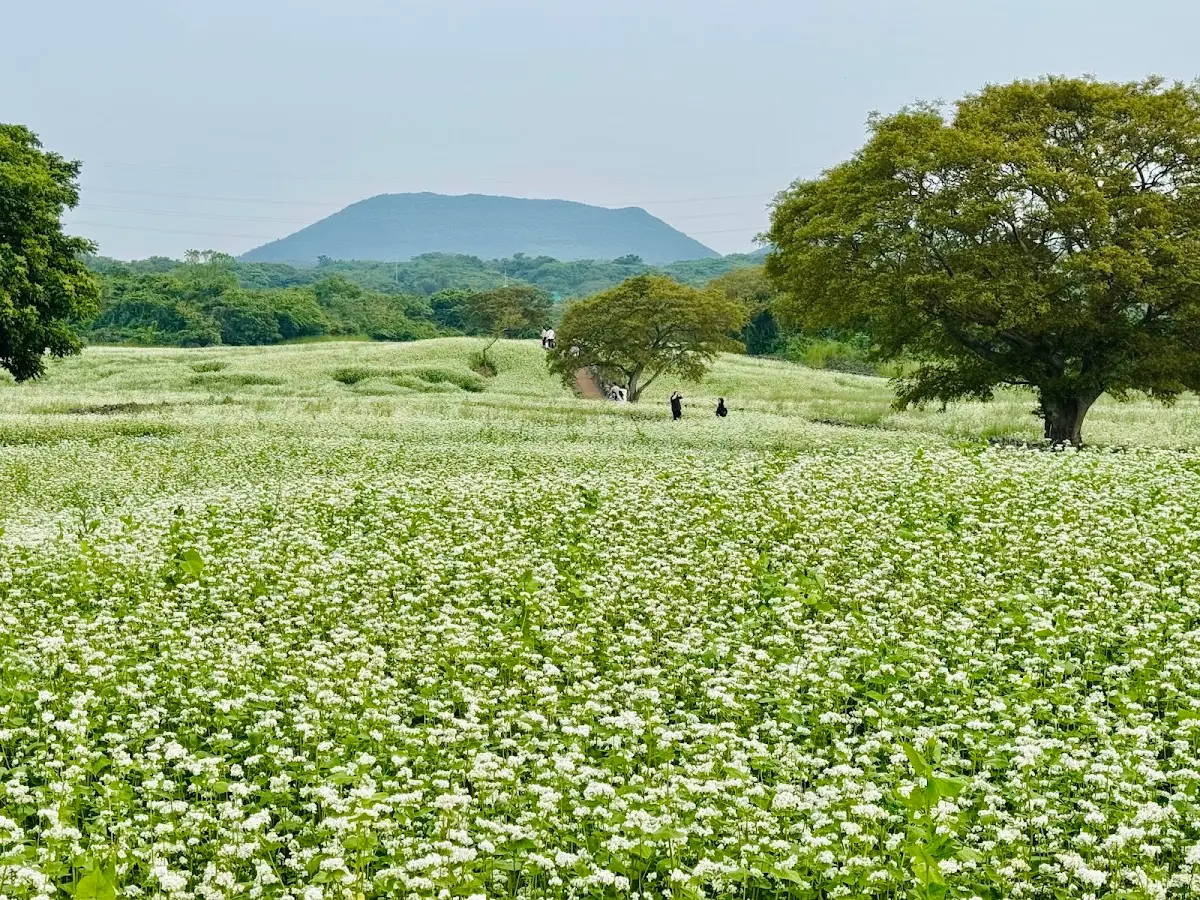
와흘메밀마을 제주특별자치도 제주시 조천읍 와흘로 103
In episode 14 Sang-tae watches Yong-pil and Sam-dal together and remembers the years when he and Bu Mi-ja loved each other. Under the big hackberry tree standing in the middle of the buckwheat field is where he picked a flower and proposed, and the single tree against the white blossom is still the village's defining view. The fields bloom in early summer and again in autumn, when the village holds its buckwheat festival.
신도포구 뿔소라공원 제주특별자치도 서귀포시 대정읍 신도리 3125-5
In episode 7 Gong Ji-chan borrows 500 won from Hae-dal and looks out for dolphins through a telescope at this small harbour. The scene is known for bringing Hae-dal, Ha-yul and Ji-chan together, and a small park with a horned turban shell sculpture sits right beside the pier. It is a working fishing port on Jeju's western edge, quiet enough to sit and watch the water away from the busier sights.
จุดน่าสนใจใกล้เคียง
Dodu Rainbow Coastal Road
A seaside walk that runs along the coast just below Dodubong. Its name comes from the concrete road barriers painted red, yellow and blue, lined up like a rainbow. The bright colors set against the blue sea make it a beloved photo spot. It pairs naturally with a climb up Dodubong, before the ascent or after coming back down.
Open at all hours, free. Dedicated parking is limited, so it is easiest to park at Dodubong and walk over. Clear afternoon light brings the colors out most vividly.
Manjanggul Lava Tube
A lava tube a short way inland from Gimnyeong. Long ago, lava released by a volcano flowed through here and left behind an enormous corridor. Part of the UNESCO World Natural Heritage site 'Jeju Volcanic Island and Lava Tubes,' it ends with a towering lava column at the far end of the public section. It stays cool even at the height of summer, a brief escape from the heat outside.
Paid admission. It closes on scheduled maintenance days, so check whether it is open before visiting. The cave floor is wet and slippery, so wear comfortable shoes and bring a light layer even in summer.
Gimnyeong Maze Park
An evergreen hedge maze near Manjanggul. Designed by a geographer who long made his home in Jeju, the tree maze offers the pleasure of winding your way through and ringing a bell at the exit. Resident cats nap here and there across the grounds, making it a favorite with families traveling with children.
Paid entry. Close to Manjanggul, so the two pair well into a half-day loop. Getting through the maze usually takes about 20 to 30 minutes.
Bijarim Forest
A torreya forest in Pyeongdae-ri, where thousands of trees that have lived for centuries gather into a broad woodland on flat ground. The path is laid with red volcanic scoria and stays gentle, easy for anyone of any age, and the light and scent filtering through the trees slow your steps on their own. It is the place to widen a journey that began with a single hackberry into a whole forest.
Paid entry; open from morning to evening, though closing times vary by season, so check ahead. There is no steep climb, so parts of the loop are manageable with a stroller or wheelchair. The forest smells richest the day after rain.
Seongsan Ilchulbong
A volcanic cone at Jeju's eastern tip, a stone's throw from Ojo Harbor. Formed when a volcano erupted in shallow sea about five thousand years ago and hardened into a bowl-shaped crater, it is inscribed on the UNESCO World Natural Heritage list. As its name suggests, the moment the sun rises is its peak, and a climb up the ridge to the summit takes in the open sea on every side and the village of Seongsan at a glance.
Paid entry. The climb to the summit takes about 20 to 30 minutes by stairs. To catch the sunrise, line up the opening hours with the day's sunrise time in advance; access is closed in high winds or bad weather, so check ahead.
วางแผนการเยี่ยมชม
Dodubong (Jeju City): About 10 minutes by car from Jeju Airport; reachable by airport or city bus. A gentle dirt path climbs to the summit in about 15 minutes. Free, open at all hours. Loveliest in the daytime when planes pass overhead, and again at sunset.
Gimnyeong Seongsegi Beach (Gujwa-eup): About 40 minutes east of Dodubong along the coastal road. Swimming in summer, quiet walks in spring and autumn. Free to enter. Pair it with the nearby Gimnyeong harbor and wind farm to feel the coastal mood of the drama.
Pyeongdae-ri hackberry tree and Bijarim (Gujwa-eup): About 15 minutes from Gimnyeong. The old hackberry stands inside the village, so move quietly and with respect. Nearby Bijarim charges a small entry fee and offers an easy, flat forest walk; check opening hours before you go.
Ojo Harbor and Seongsan (Seongsan-eup): About 30 minutes from Pyeongdae-ri, at Jeju's eastern tip. Ojo Harbor is a quiet port on Jeju Olle Trail Course 2, free to enter. Seongsan Ilchulbong peaks at sunrise and charges admission; access can be closed in bad weather, so check ahead.
Suggested route: Start west at Dodubong, then follow the coast through Gimnyeong, Pyeongdae-ri, and on to Ojo and Seongsan. Doable in a single day by rental car, or over two days at a slower pace. Spring and autumn are the best walking seasons.